How to make a Roman blind / shade

And here is the long awaited tutorial. Sorry I took so long. I completely underestimated how long it would take to put together! Despite the lengthy post, this really is a simple sewing project, involving jus a few lines of straight line sewing. Please do a mock up first to check I haven’t given you a bum-steer! And please do point out anything that is unclear or needs adding.

It does, however require some very careful measuring and a few calculations.

No corners must be cut. The accuracy in the measurements will ensure perfectly fitting and super smooth operating blinds.
Remember: Measure twice (at least!) and cut once!

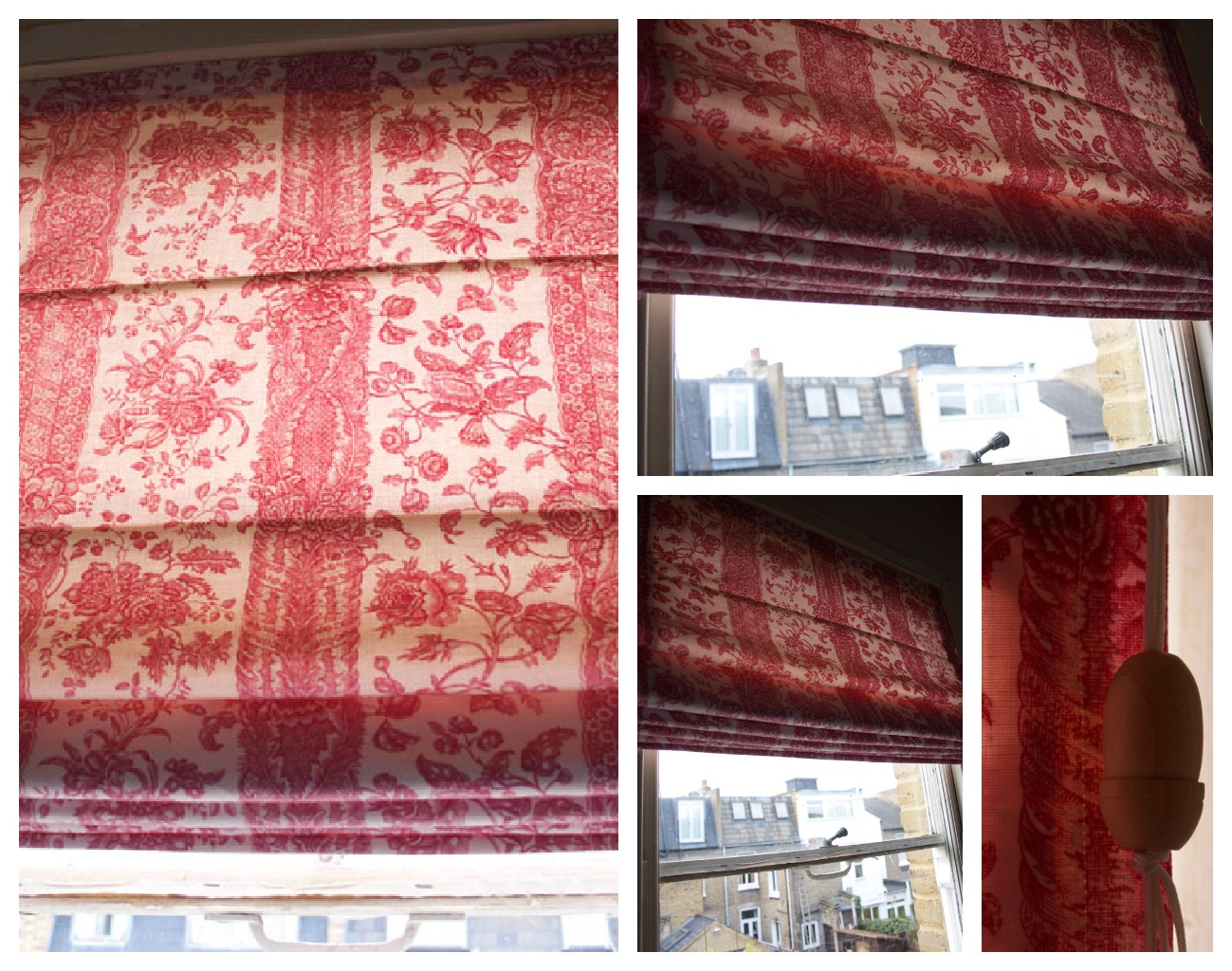
roman shades during day

You will need:
Furnishing weight fabric for the outer
Curtain lining for the backing.
Nylon cord. As a guide I used 9m but yours may be more or less.
Small plastic rings
4 screw eyes
Cleat
Acorn / cord pull.
Strong self adhesive velcro. The width of your window frame or baton.
Wooden doweling or synthetic rods cut to size.


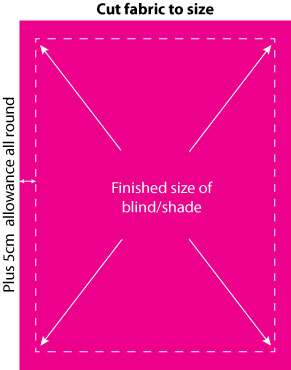
1. Calculate the size and cut your main fabric roman shade step 1
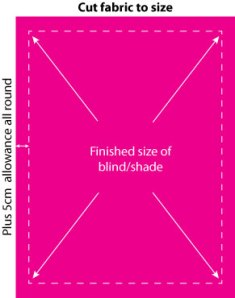
Measure the size that you want your finished blind to be.

Add 5cm side turnings and hem allowances on all sides, to this measurement, and cut your fabric.
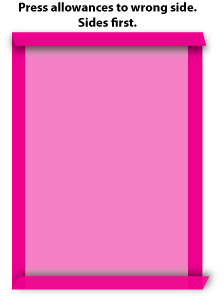

roman shade tutorial step 22. Press Allowances
Press the allowances all round. You could even mitre the corners if you wanted to be really clever… er…I didn’t!
No need to stitch in place at this point. All will become clear!


roman shade tutorial step 33. Now to prepare your lining… and some serious sums!
Start with the measurement of the finished size of your blind. This will include allowances of 2.5cm all round.

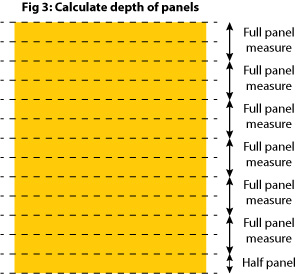
First work out how many sections/folds you want to incorporate into your blind.
I chose to have 7.
The bottom panel must be half the depth of the others which are equidistant.
To calculate this I doubled 7 (panels) to make 14 and deducted 1 to make 13 and divided this into the finished depth of the blind (150cm in my case)
so:
7 x 2 – 1 = 13
150cm / 13 = 11.5

11.5 is the half size panel at the bottom
The remaining 6 full size panels will be double that at 23cm (see fig 3)

You will also need to accommodate the dowels so extra fabric will be needed to allow for the casings.
Measure the circumference of your dowels and allow a couple of milimeters extra, otherwise you will struggle to get the dowels in the casings.

My casings were 12mm.

12mm x 7 panels = 84mm (8.4cm to be added to the final depth of the lining fabric)

So the finished measurement of the lining fabric to be cut is 80cm (width) x 158.4 (150+8.4)

Always measure twice and cut once!
You can now cut your lining to size.


4. Mark the positions of the panels then hem all round

Mark the positions of the panels, starting with the bottom one, in my case, 11.5cm from the bottom. I chose to mark on the right side with chalk to make the lines easier to follow.

Mark up from this point, the depth of the casing, in my case 12mm. From that point, mark the next full size panel up, in my case, 23cm
Mark the depth of the casing and from that point the next full size panel. Repeat the markings for the rest of the panel.

The side turnings and hem allowance is 2.5cm all round. Fold and press in position.
Sew all round close to the edges of the lining fabric so the rods wont get caught in the seams.
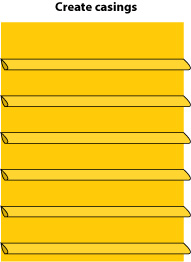

roman shade tutorial step 55. Create casings for rods

With wrong sides together and guide lines matching, fold in between the casing lines and press.

Sew accurately on the marked lines from edge to edge.
Repeat this for the remaining casings.
Your lining is now complete and ready to attach to the main fabric.
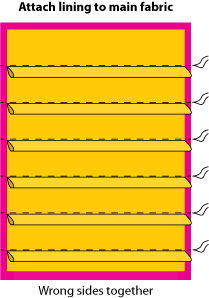

roman shade tutorial step 66. Attach prepared lining to main fabric

Lay the main fabric, as prepared in step 2, wrong side up on a flat surface.

Lay the prepared lining, wrong sides down, on top of the main fabric, making sure it sits 2.5cm in from each edge.

Making sure both layers are perfectly flat, pin together along the casings, so the casings are facing down towards the bottom hem.
Use as many pins as it takes to secure your two pieces together with no bubbles or creases!

Sew neatly and carefully from one side to the other, directly above the casings, sewing both lining and main fabric together.

Hand sew the top edge of the lining to the main fabric. Or machine stitch if you prefer.


7. Attaching the velcro

Stick the loop side (the fluffy side) of the velcro to the top edge of your blind.

Stick the hook side (the spiky side) of the velcro to the top edge of your baton or window.

NB. I used the strongest adhesive velcro I could find, which worked beautifully but to ensure it didn’t separate from the fabric I also hand stitched it.
This is very difficult but worth the effort to strengthen the bond. Do not under any circumstances try to sew it on the machine. The adhesive will totally ruin the needle and get stuck!
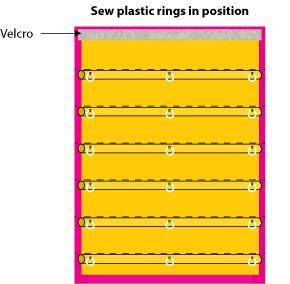

roman shade tutorial step 88. Insert the rods and sew on the rings

Inset a rod into the hem of the main fabric and hand sew the hem of the main fabric to encase it.
This helps to give the base of the blind a bit of weight and keeps it hanging nice and straight.

Hand sew the lining hem over the main fabric hem.

Insert the other rods into the casings and hand stitch the ends closed to stop the dowels falling out.

Hand sew 3 plastic rings to the centre of each dowel casing, one at each end and one in the middle.
It is important that the rings are perfectly aligned with each other.
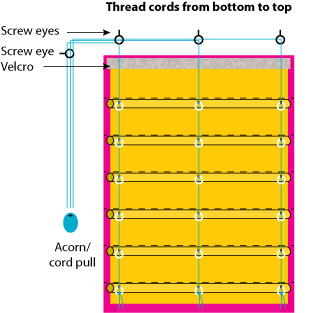

roman shade tutorial step 99. Attaching the cords

Screw 3 screw-eyes into the the underside of your baton or window frame.
They must be aligned with the rings you have attached to your dowel casings.

Attach the 4th screw eye to the side of the window frame, in line with the others.

Attach 3 lengths of nylon cord to the bottom 3 rings. Ensure the knots are tied securely.

Assuming your pull cord is going to be on the right hand side of the window,
run the first length of nylon cord up through the right hand set of rings. It will need to be long enough to do this and then run along the top 3 screw eyes and the side screw eye, down to the cleat, plus a little bit more!
Then run the middle cord up through the rings and allow enough to run through the centre and right hand screw eye, and the side screw eye, down to the cleat, plus a little bit more!
The final cord runs up the rings in the same way, through the top right hand screw eye, through the side screw eye and down to the cleat plus a little bit more!

NB: The screw eyes will sit below the velcro in real life!


10. Attach the blind to the window

You can now attach your blind to the window by pressing the velcro edges together firmly.
Thread the cords as detailed above.
With the blind at the lowered position, carefully make sure that the cords are neatly and precisely lined up. Gently pull on them individually and secure all three cords together at the ends with an ‘acorn’ or cord-pull.
Attach your cleat, proudly raise your blind, marvel at the magical way it folds up and wrap the cord around your cleat. Or lower it and raise it a few more times just for the joyfulness of it all!
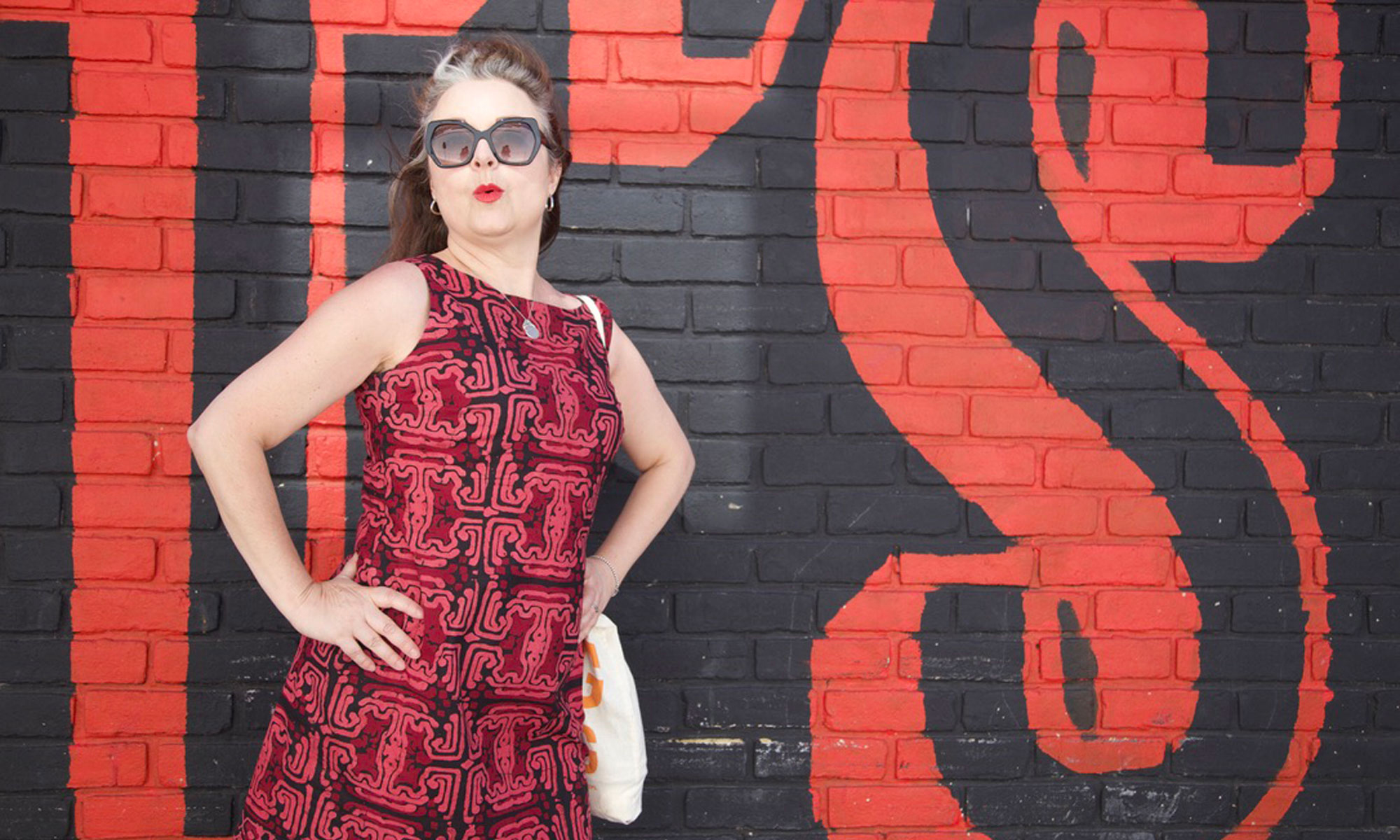

ooobop! review: Burda Style January 2013

Burda January 2013 cover

One might be advised to take the following review with a pinch of salt. I am ill and grumpy and should never have ventured out on this cold, wet miserable day to get hold of my belated issue. Belated, not because of any neglect on my part to pick it up sooner but because Smiths clean forgot to put it on the shelves. I think I might have got a poor sales assistant busted as a result.

My glee turned to gloom when I flicked though the first section, before I got to the checkout. The ‘Party’ section. Really? Not my kind of party. What no LBD? No slinky numbers, save the Bacofoil one. Maybe overload of purple has left me unable to think outside of the box. mmmm…. what do you think?

Burda January 2013 partyThere were a couple in this section that left me a little more hopeful. Gosh I am being so negative, soz! Strange though because I don’t really do strides or leggings but quite fancy a pair of leather ones, Given my determination to grow old disgracefully! Still not very partyish though.

Burda January 2013 party in purpleBut hang on. Here we go. This is far more up my street. A section entitled the Aenne Burda Collection. Five reinterpreted dresses and a coat from the 50’s and 60’s. And I love each and every one of them! Though I really want the button band on the pink dress to be narrower. I don’t need my midriff highlighted quite so much!

Aenne Burda collection dresses and coatLoungewear, leisurewear, sporty home knits, whatever… not really a fan of such garments. Even though I could be accused of hypochrisy as I sit here, sniffling in my sloppy pjs and age-old baggy T!

But never say never. These patterns do come in handy from time to time and they whip up quick so long as you don’t have an aversion to stretchy jersey fabrics. I’ve made a few peasant tops but I think one in a lovely drapey viscose jersey with long sleeves might be a more glamourous casual addition.

Home story loungewear

So was the glamour saved for the Plus Section as per usual? Nope! I like the green dress and the waterfall fronts of the jackets. In fact I quite like the layering and the colour palette but I might give the huggy bear waistcoat a miss!

Burda january 2013 plus section

And just in case you need a fancy dress costume…. there is certainly a mixed bag going on here!

Looks like a lot of work to pull of a Hungry Caterpillar costume but wouldn’t that be a hoot?! I always gloss over patterns like these but on closer inspection there is always a bodice or a sleeve pattern that could be borrowed. Not forgetting random dressing up days at school!

Burda January 2013 fancy dressThere are lots of lovely little crafty projects in this issue too, like detatchable collars, a bead-embroidered neck band, bejewelled bangles and shoes plus these adorable teddies made from recycled jumpers and blankets. No actual pattern for these but the instructions and inspiration is all that is necessary.

bunnies from recycled jumpersWell in case I don’t touch base before the new year, here’s wishing you all a fabulous 2013. Thank you for faithfully sticking with me and for all your wonderful comments. It is already so difficult to remember life pre-ooobop! I’m hoping to get more stealthlike in my attempt at stealing sewing time in the new year and so be much more productive. But what good would that be without having you lovely lot to share it with.
Truly Grateful.

Much Love

Janene x

Home-made maternity belt, circa 1940!

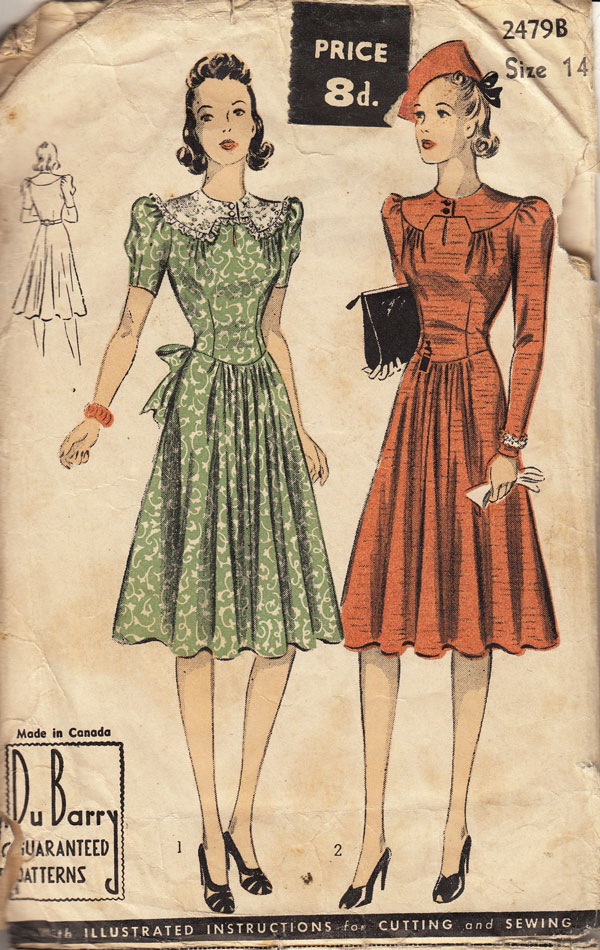
I was just searching for a date on this pattern so I could update my vintage pattern collection page with this little beauty…

Du Barry 2479B…when out popped this little cutting which tickled me, I must say:
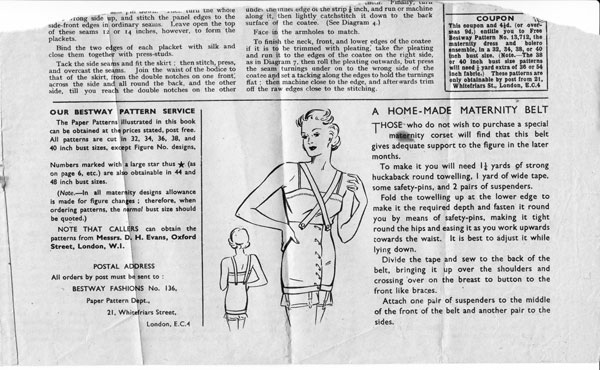
home made maternity belt circa 1940
home made maternity belt circa 1940 (click on image to enlarge)

If you do try this at home, remember “It is best to adjust it while lying down.”

In the latter months?!! I can just imagine trying to get up off the bed, like some ungainly upside-down tortoise.

And there’s me thinking the 1940s was all about glamour, inside and out! Doh! It’s a wonder all 1940s babies weren’t born squished like Flat Stanley!

Incidentally, I didn’t find an actual date. I’m assuming (once again) that this pattern dates 1940ish but any more accurate hunches are appreciated.

Secret Santa Success!

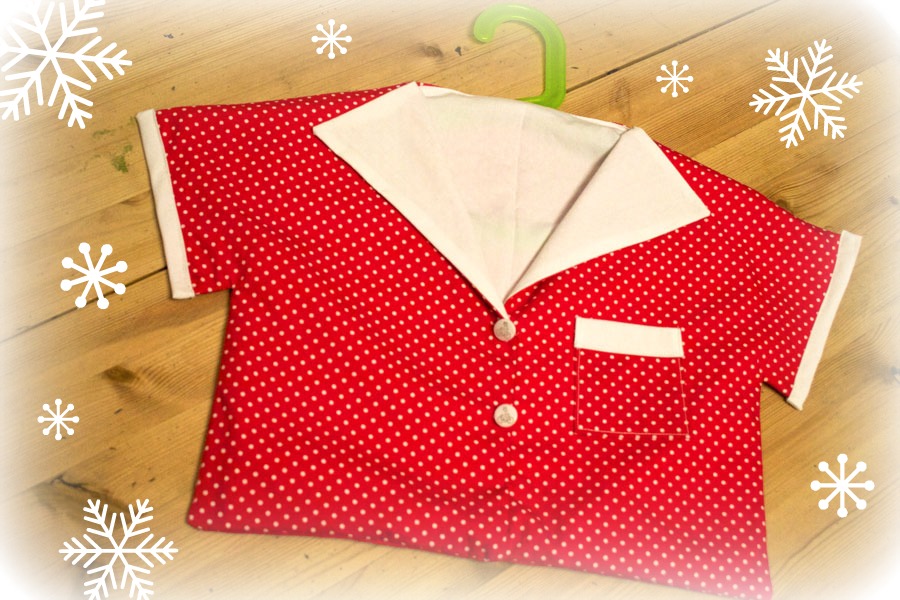
50s_shirt_peg_bag_x

I know, I know… this still isn’t anything like a tutorial for Roman Blinds.

I’m on it, honestly I am and it will happen, once I’ve get round to drawing some diagrams to accompany the words.

But for now I can reveal the only Christmassy sewing project that I managed to squeeze into my crazy real-life workload. It was a secret Santa gift for my friend at work.

The theme last year was ‘home made’ or ‘charity shop bought’. I made a selection of jams for my boss and she loved them! So when this years theme was decided as ‘red white and gold’ I was determined to make something once again.

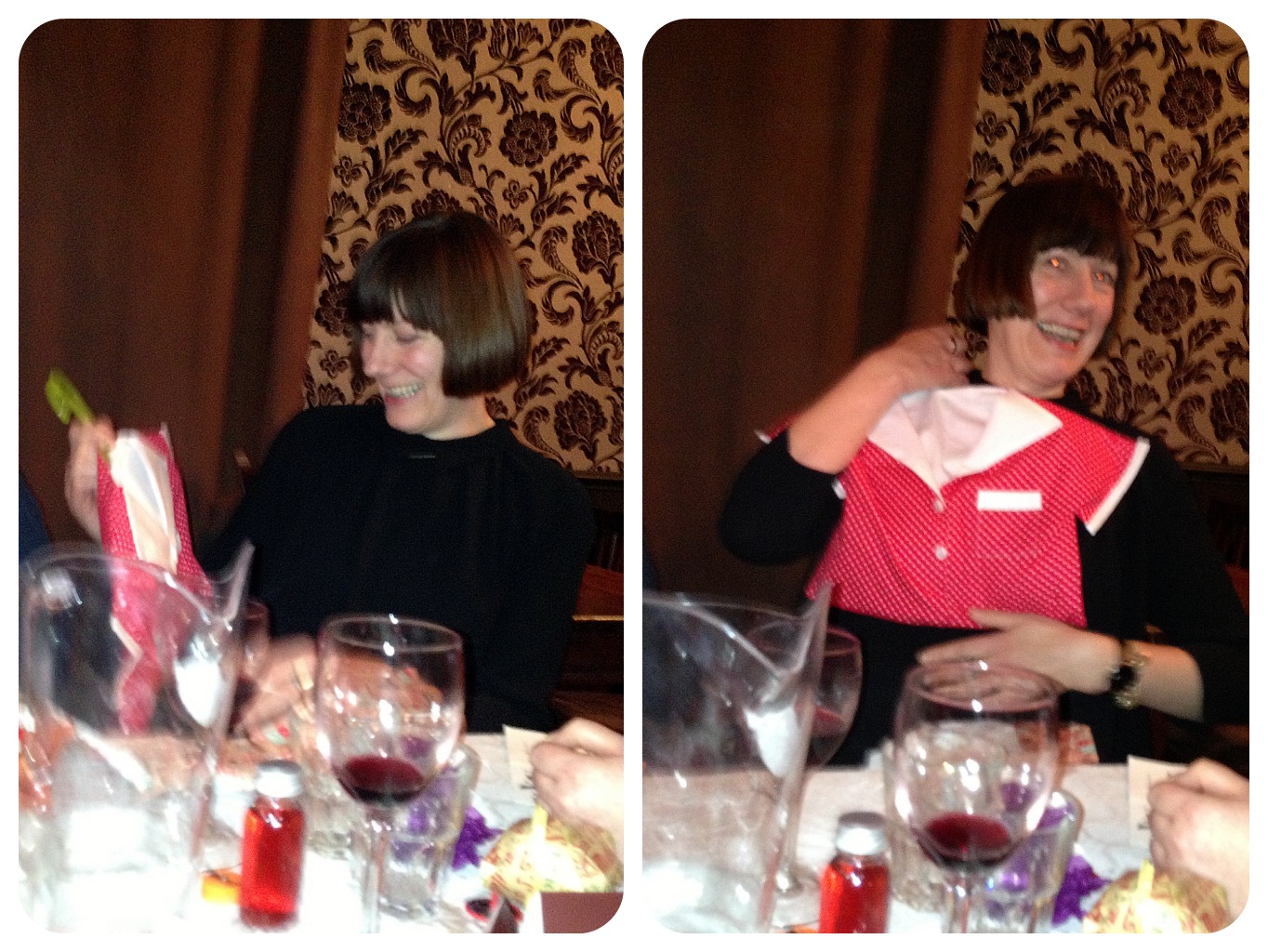
As soon as I plucked Ness out of the hat, I knew what I was going to make for her. She recently moved house this year, and was really excited to have a garden for the first time. ‘I will be needing a peg bag and everything’, she said! I had been meaning to make one ever since she came out with that so this was the perfect prompt. She also likes all things 50s, including my blouse so the Norman Hartnell approach to the peg bag was the only way forward!

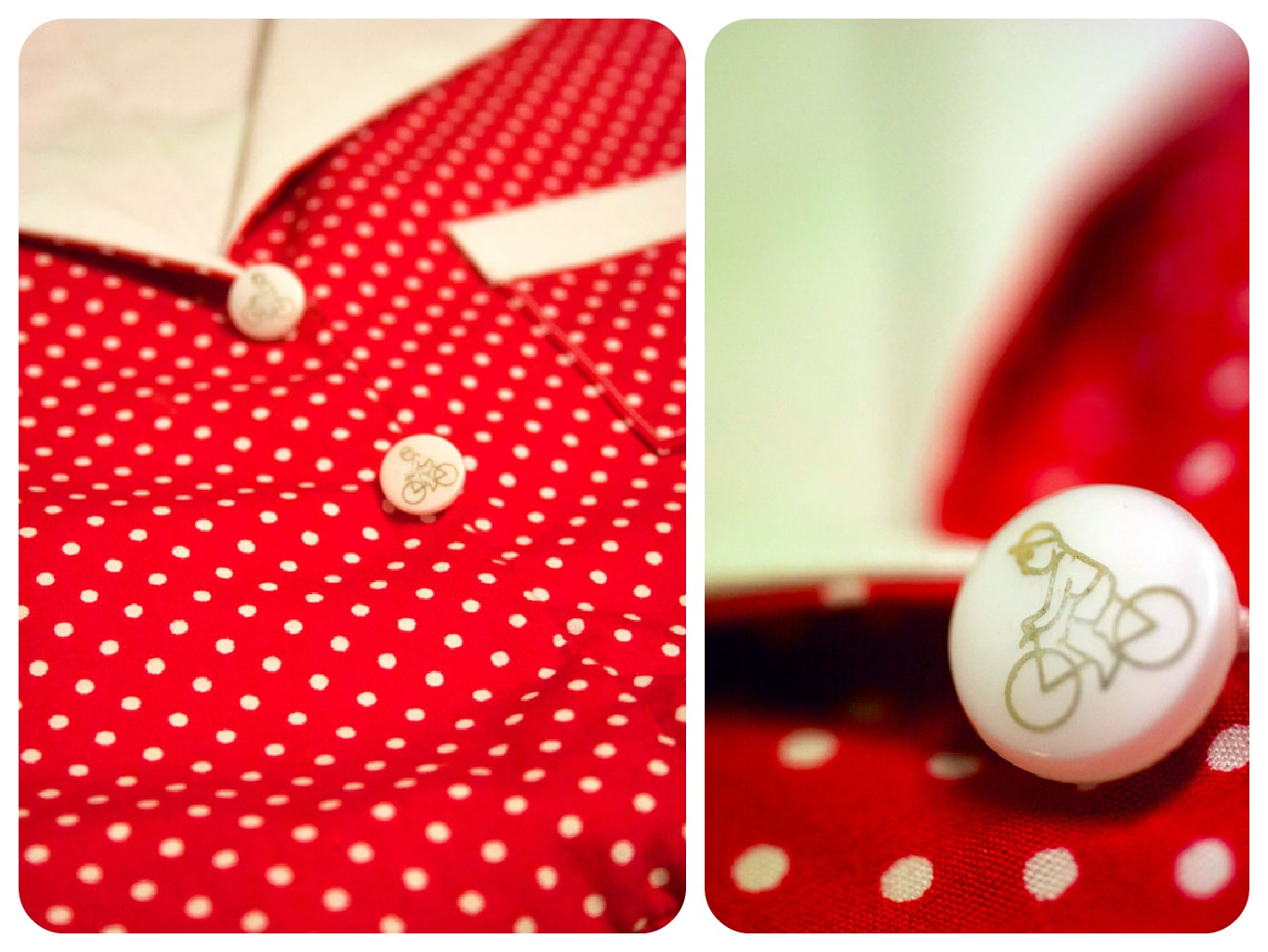
The two little white buttons with gold bicycles were sourced by Little Miss Ooobop! at a vintage fair last year and have seemingly been waiting patiently for this project!

peg bag buttons

To make the pattern, I drew a template for the back, overall shape and cut 2, one in pin dot and one lining. The front pieces are literally half of the back but allowing a couple of centimeters at the front for overlap.

I used one of my daughter’s child sized Ikea hangers. If I made this again, I would source a lovely wooden hanger so the shoulders are more horizontal and not sloping down.

She was delighted! Though the other partygoers at the opposite end of the table were a little confused. Not sure those young pups even know what a peg bag is! They just thought I’d miscalculated some measurements!

secret santa success

It was hardly a secret though. I was one of two seamstresses at the table and my poker face was rubbish!

I’m winding down from work as from tomorrow – *squeal* – and I’m really hoping to get some sewing action in before I return. Hoping it will curb my usual Christmassy eating frenzy.  Of course, that’s if 21.12.12 doesn’t prove to be the end of the world in which case we will all be eating hats!

Two lovely awards from two lovely ladies…

Forgive me blogworld for I have been a bad blogger. It has been 15 days since my last post and still neither a newly sewn garm nor a promised tute for a Roman blind do declare themselves done. I can hear the tongues wagging and I can see the sideways looks and I feel guilty as charged, believe you, me!!

But I must be doing something right. For I have been nominated for two very pretty awards by two very lovely ladies.

very-inspiring-blogger-award-2

one lovely blog award

The first thank you goes out to The Couture Academic. I was drawn to Kat’s blog pretty much from the day she started. She’s all about quality, with lots of lovely detail in every post. If you’ve not met yet, then hop over and grab yourself a lesson or two in ‘how it should be done’! There should also be an award for fastest ever quilt made up by a total beginner. Check this out!

The second and no less equally amazing thank you goes to CherryPix. I love this blog. Such honest posts, from the heart with makes to match. You must check out the Holy Batwings dress. Great choice of fabrics, so original and stylish. I keep meaning to shamelessly copy her Red Arc Skirt too but we’ll keep that to ourselves! 😉

There are rules of course:

1. Thank the person who nominated you
2. Add The One Lovely Blog Award The Very Inspiring Blogger Award to your post.
3. Share 7 things about yourself.
4. Pass the award on to 10 nominees.
5. Include this set of rules.
6. Inform your nominees by posting a comment on their blogs.

Seven Things about Me!

1. I’m a freelance graphic designer by day. Mostly working between publishers and media companies. Designing covers and insides for lovely books and DVD covers. I sew by night, obvs!

2. My family consists of three lovely children and a fiancé whom I am very proud of. Oh and two crazy cats to add to the mix.

3. I’m rather partial to a G&T but it’s got to be Gordons!

4. I am a devoted David Bowie fan. Ever since I was about 12 years old. And especially when I found out that he wrote a song called ‘Janene’! 😉

5. I am addicted to collecting vintage patterns and fabric. I will never in my lifetime achieve all that I want to make. But I’m ok with that and will try nonetheless!

6. I live in West London and am quite happy about that, especially with the Goldhawk Road fabric heaven being a stones throw away!

7. I have recently found out that I have hypermobile joints. Might explain why I can still do the splits at my ripe old age!!

And my ten nominees are…
(In no particular order)

http://bellemegan.wordpress.com/

http://zosews.com/

http://beebeesvintagedress.blogspot.co.uk/

http://sewbusylizzy.wordpress.com/

http://jotsfromasmallapt.wordpress.com/

http://fashionforlunch.wordpress.com/

http://www.melissafour.co.uk/

http://quietvintagesewing.wordpress.com/

http://www.trashplanetdiy.com/

http://paunnet.blogspot.co.uk/

And just as an aside. I would very much like to thank all who come to visit ooobop! and leave lovely comments and everyone in blogworld who has inspired me. The above list is just the tip of the iceberg. Scary how many I do actually read! I am truly grateful to you all because you have all contributed to this path that my life now follows and to all the joy it brings. I’ll stop now!! 🙂

Roman blinds/shades for the landing

Well I’ve certainly got that winter nesty feeling. Never thought I’d say it but the rain can tip down as much as it likes. The wind can howl till it’s heart content and who cares if it’s cold as a polar bear’s nose. I am happily inside, toasty and warm, making bread, watching old movies, sewing and putting up my freshly made Roman blinds, or Roman shades if you are anywhere but the UK!

roman shades during day

I’m assuming the fabric is vintage. It had that musty attic smell about it when I landed 5 metres of it, for £10 at a charity shop. But nothing a spruce in the washing machine couldn’t sort.

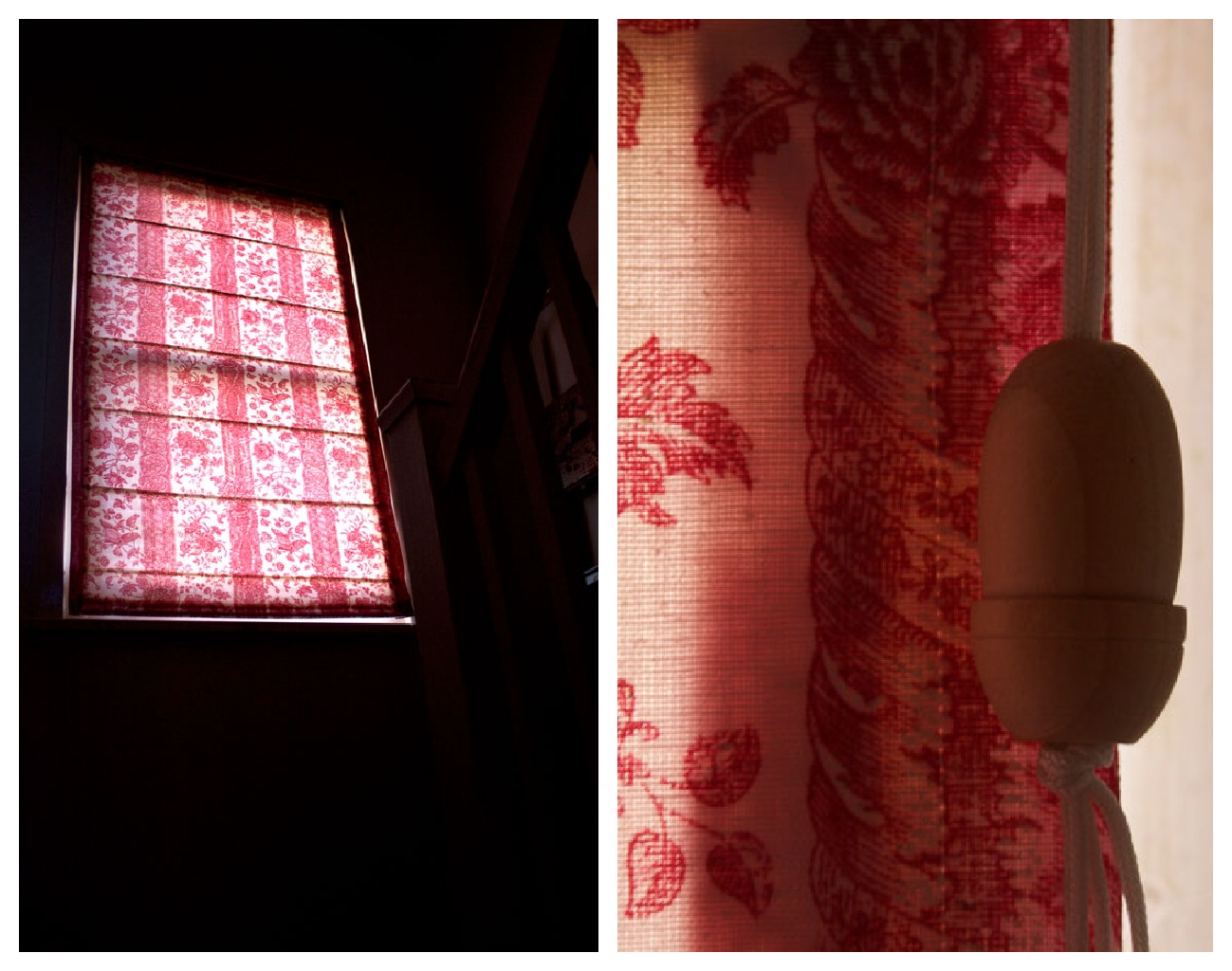
The hardest thing about these darn blinds (or shades) is photographing them! Too light outside and you get too much show through. Too dark and you see nothing!

roman shades in the dark

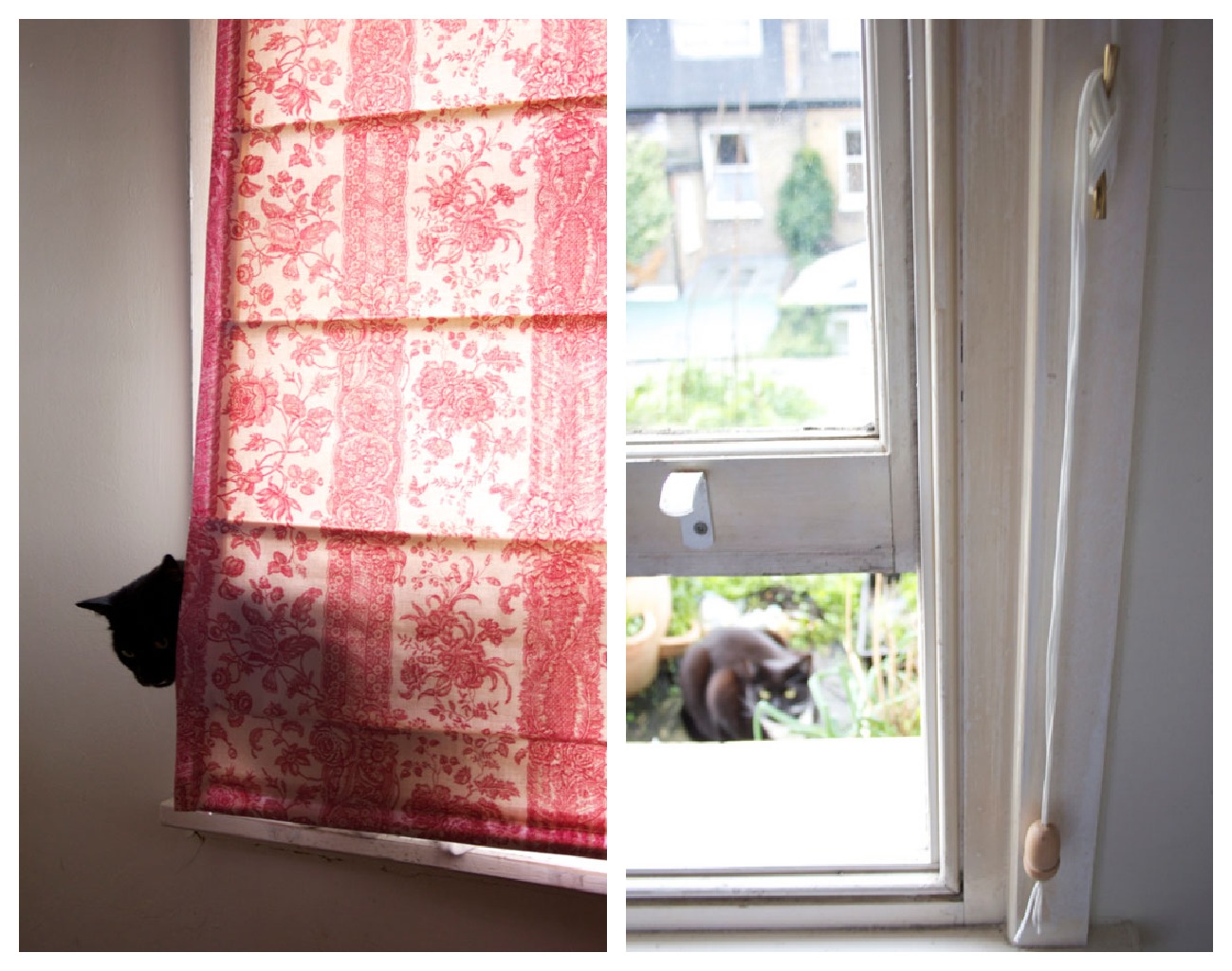
Too long trying to be arty farty with it all and you get cat-hassle!

roman shade with cat interference

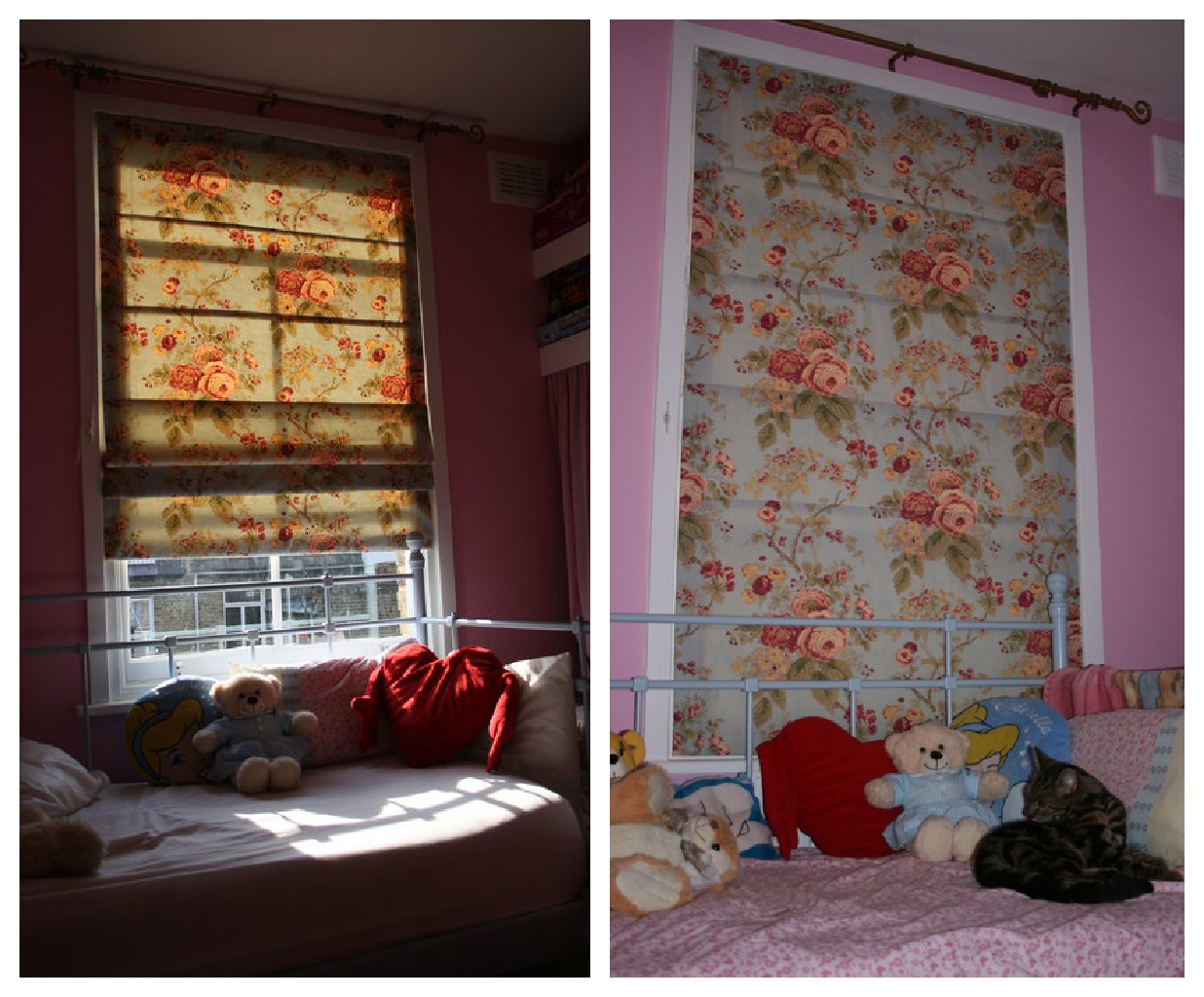
I’ve made these on a couple of occasions before but only posted on Burda. This set I made for Little Miss Ooobop’s room using an remnant of fabric I picked up in a discount fabric store for a fiver:

Roman blinds in rose fabric

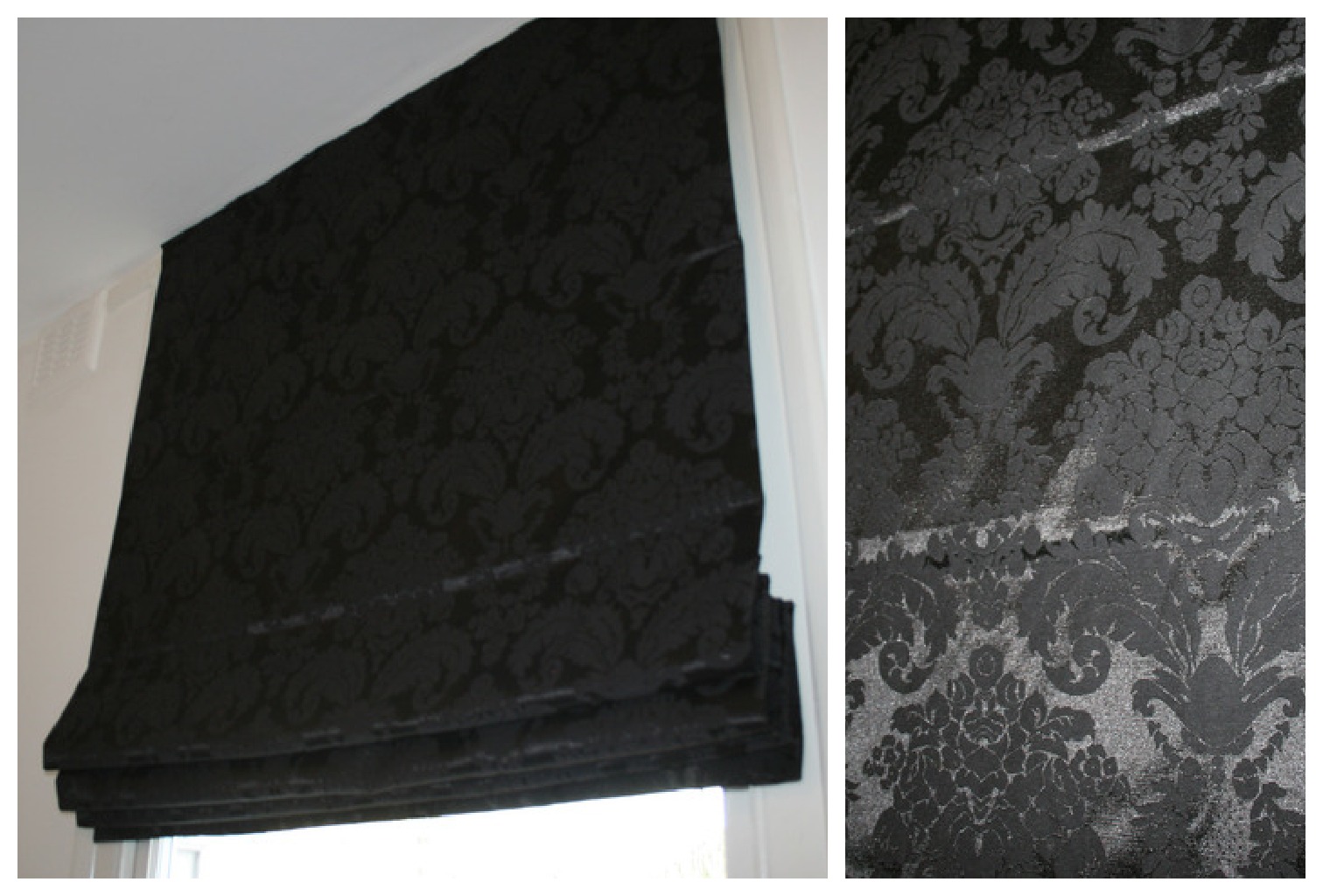
And these black ones I made for my eldest daughter… for considerably more pounds:

black roman blinds

This is a great sewing project for a beginner because it only involves sewing in straight lines. But as many times as you make them you still have to measure twice and cut once. Or in my case, five or six times. It’s all in the maths.

For anyone who’s interested I will compile a tutorial. I didn’t take in-progress shots, mainly because I worked in such a horrendous way, spread all out on the living room floor with cats jeopardising the project every step of the way! But I will create some diagrams which should be a lot easier to follow. Just not tonight, ’cause I’m pooped!

Old Maid’s Puzzle quilt block

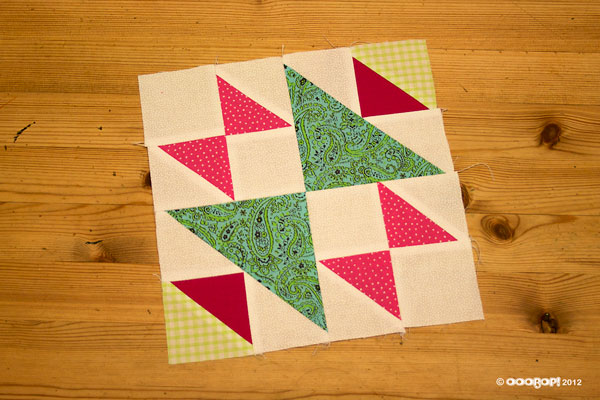
Old Maids Puzzle Quilt Block

This quilt block is called Old Maid’s Puzzle, though also more recently known as the Bachelorette. It is block number 21 from issue 23 ‘Art of Quilting’. 

This is the first of my blocks, so far that incorporate a classic ‘bow’ effect, formed by the points of paired triangles touching centrally.

Though there are lots of pieces, there are no inset seams and so it was pretty straightforward. The only problem I encountered was the triangle points being drawn down into the feed dog a couple of times. I have had this issue before. Not sure how to stop it happening but it seems to happen most if I reinforce the stitch at the beginning. It kind of gets chewed up.

In a nutshell: the pink dotty and white triangles are joined along their diagonals, as are the pomegranate and lime gingham triangles. They are ‘chained’ to make 6  squares. After clipping apart they are given a good pressing. The white squares are seamed alongside the pink dotty sides of the made up squares. Then the rectangles are paired to make ‘bows’. The remaining white triangle pieces are sewn to the pomegranate and lime gingham squares to form a larger triangle and then this triangle is seamed to the larger green paisley triangle. Finally the 4 larger blocks are joined together and the final central seam pressed open.

As with most of the blocks, I’m sure they will work much better when they are in position but I do think this one is one of the more interesting ones. A bit wonky on the edges but I’m sure I can cheat that when I come to do the edging!

Block Facts:

Name: Old Maid’s Puzzle or Bachelorette
History: This block features in 19th century Amish quilts
Level: Some experience needed to create neat joins where the triangles meet
No. of pieces: 22

Progress report:

Block 1: The Double Four Patch
Block 2: The Whirlwind
Block 3: The Sailboat
Block 4: The Shoo-fly
Block 5: The Trafalgar
Block 6: The Windmill
Block 7: The Chequer Square
Block 8: The Diamond Square
Block 9: The Cactus Pot
Block 10: The Sawtooth Star
Block 11: To come!
Block 12: The Windmill Sails block
Block 13: The Basket of Flowers block
Block 14: Susannah
Block 15: Road to Oklhahoma
Block 16: Chequer Star
Block 17: Nelson’s Victory
Block 18: Fair and Square
Block 19: Diamond Pinwheel
Block 20: Whirligig
Block 21: Old Maid’s Puzzle

ooobop! review: Burda Style December 2012

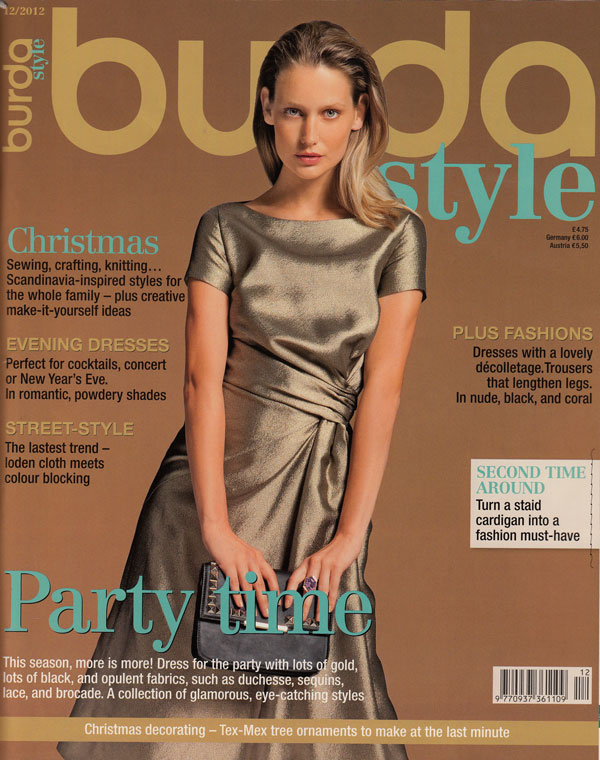
Burda december 2012

Was beginning to get a bit anxious about the late appearance of this issue on the shelves of Smiths! But was it worth the wait?…. In my humble opinion, if there is just one great pattern in there it’s worth the cover price. Two and I’m laughing. Three and it’s definitely Christmas. But more than three? Oh yes, yes yes!!

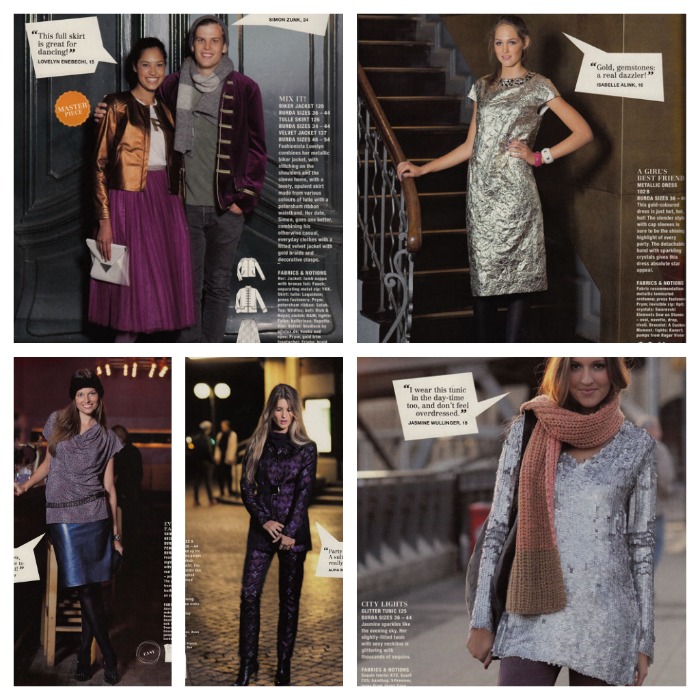
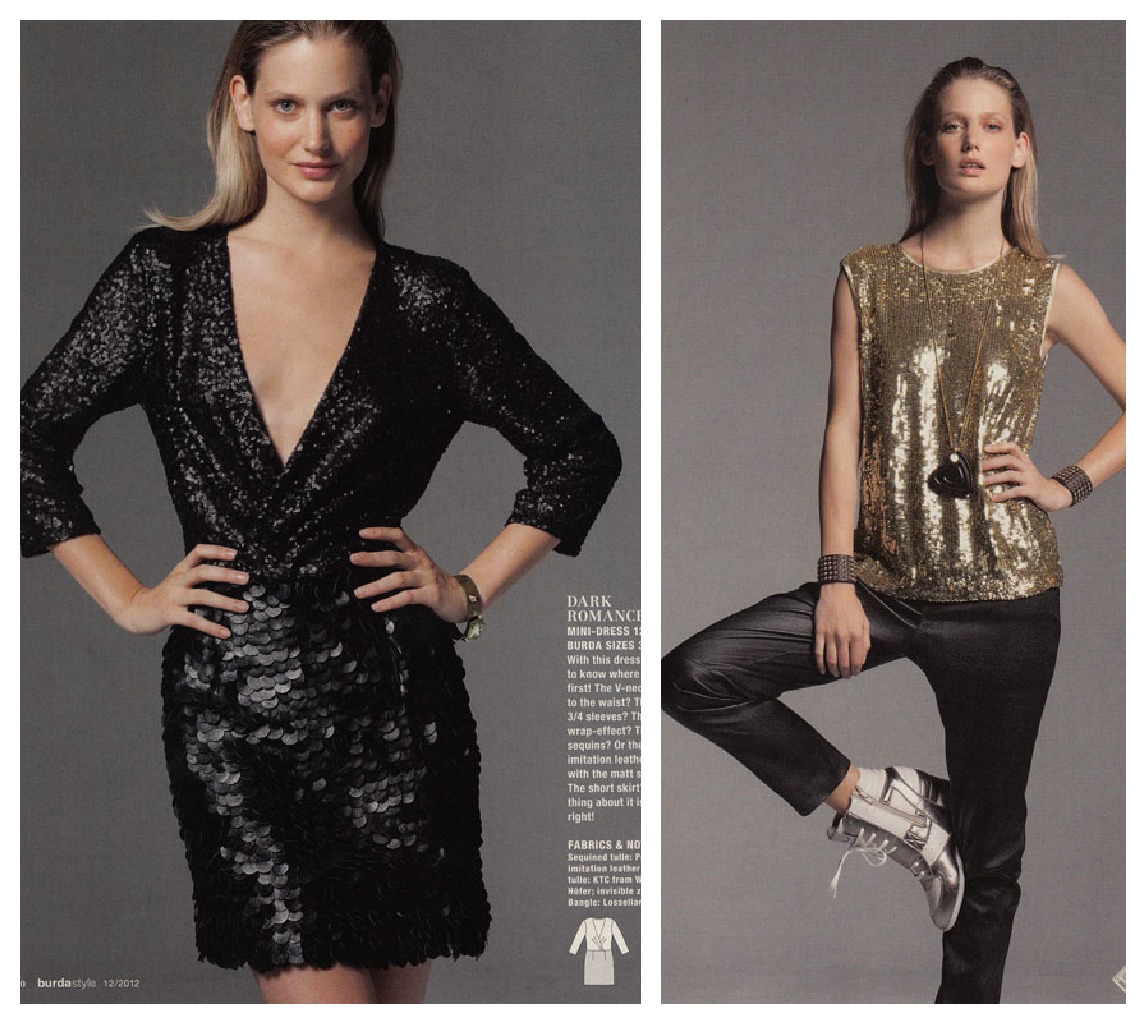
Party Fashions opens with  a great fitted jacket in black and gold. Sling it on over a pair of jeans and a T and you are so ready for the party. And check out the detail on the ‘Master Piece’ dress. Hurts my head a bit wondering how that is created. And it has 3.5 ‘difficulty blobs’ out of a possible 4  but as luck would have it, there is a step-by-step sewing course included, to help you on your way.

party fashions

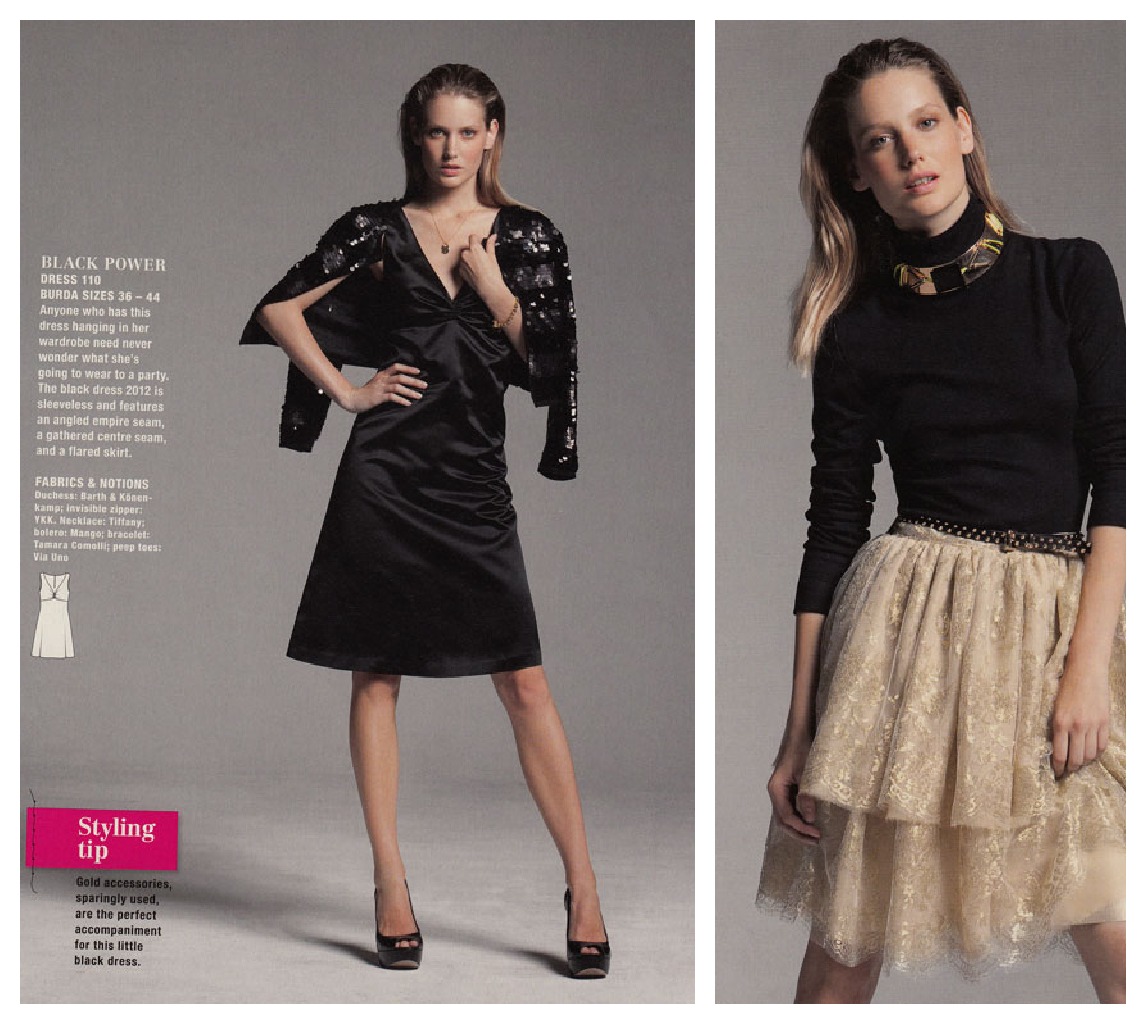
I love this ‘Black Power’ dress. Shame it is obsured by the jacket in this shot but the line drawing highlights the simple lines. Would be gorgous in silk. In stark contrast, not really a fan of ruffled layered bottom halves. Only because my bottom half doesn’t need bigging up. But this little skirt is pretty with the metallic tulle lace overlay. And incredibly easy to make.

party fashions

Party Fashions wouldn’t be complete without an adornment of sequins but I can’t help but think how spiky they must be to wear. The skirt part on the black dress however is made from imitation leather scales. Now your’e talking! I don’t tend to do trousers anymore either but stretch nappa leather ones like these are luring me back!

sequins

More sequins and shine…

…. and then we are on to Christmas!!

Boy am I excited about this coat. I was given a decent length of a lime green/chocolate shot silk/wool mix fabric. Quite heavy. Probably intended for furnishing. Certainly not dressmaking. But I instantly had visions of classy and totally original coat. Have been looking for the perfect one. And now, as if by magic, I think I have found it! Just praying there is enough fabric!

burda 12 2012 coat

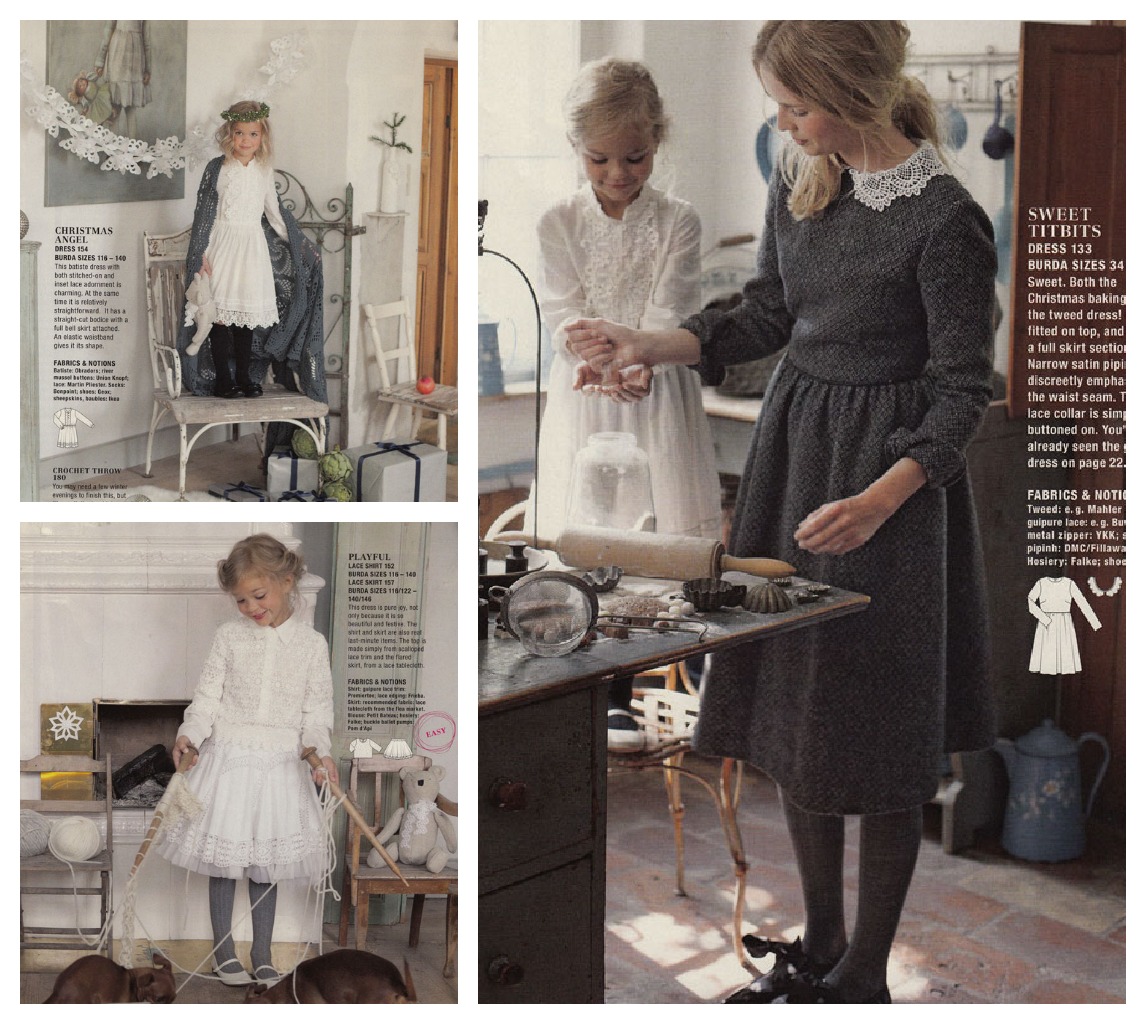
Not sure if I am suited to the following look, though I think the skirt is very interesting. Perhaps its the distraction of the 1D lookalike in the photo. I do however, reeeaaallly like that little girl’s shift dress. And love that it is actually in my daughter’s size. More often than not, the kids patterns are either too small or too large and I’m far too lazy busy for pattern grading!

girls shift dress

Again. I’m not feeling the puritan look but the jacket with the retro peplum and the little girls coat is totally up my street!

puritan look

The whole sweet angel and tweed look is maybe pushing the boundaries of sweet. Verging almost on sickly, I’d say! I can hear Mr  and Master Ooobop! roaring with laughter as LMO and myself prepare Christmas lunch in such puritanical stylee. The fact that LMO would howl with protest if every I tried to dress her like this is a sure thing too!

angel dress

A good teddy bear pattern always comes in handy as a gift for a small person. Or even a grown up! I do enjoy sewing toys just as much but so far haven’t strayed from the path of Tilda makes. Burda have even included the corochet pattern for the lovely shawl they are sitting on. Oh please don’t get me side-tracked!

teddy pic

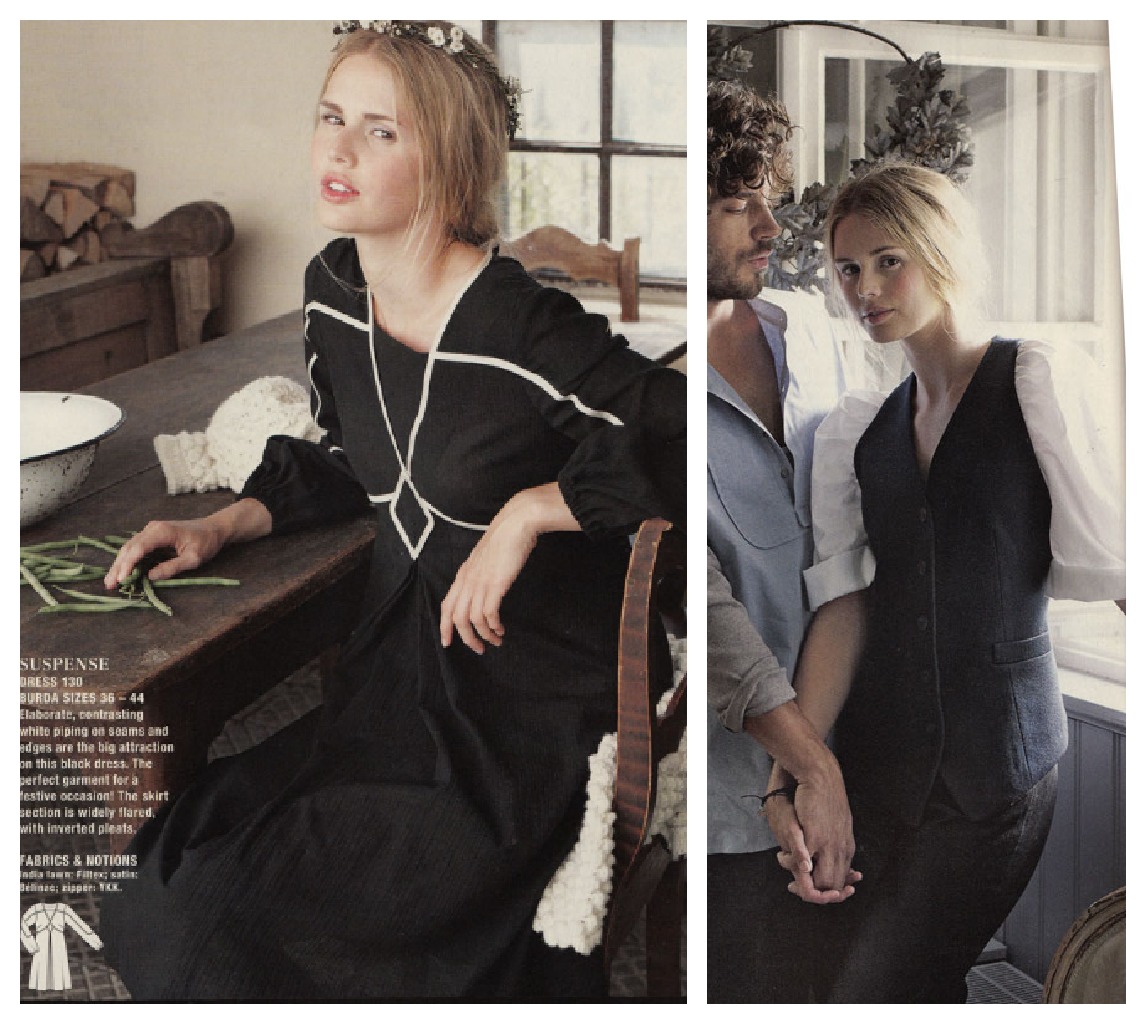
I keep coming back to this dress. It’s not instantly my thing but I love how the seam joins have been highlighted in white. Definitely a conversation piece. I quite like the waiscoat too but they can keep their billowy sleeves!

waistcoat

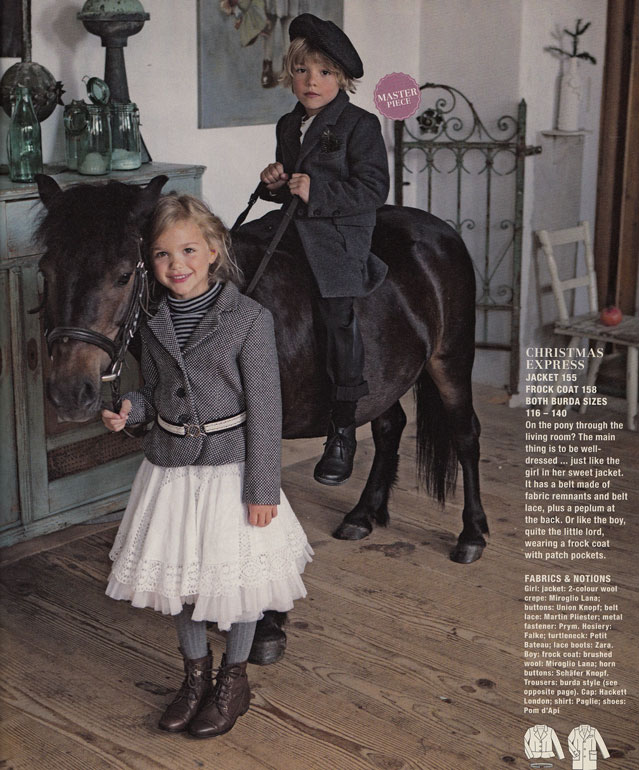
There’s a Master Piece jacket and coat pattern for the smalls too. Very classy. I’m sure I could talk LMO into that jacket, if it meant she could keep her Doc Martens on too!

kids coats

There’s a fun Street Style section with some clever twists on casual using wool. Makes for a more quality look than with the usual jersey. But I have glossed over that because I don’t really do casual street!

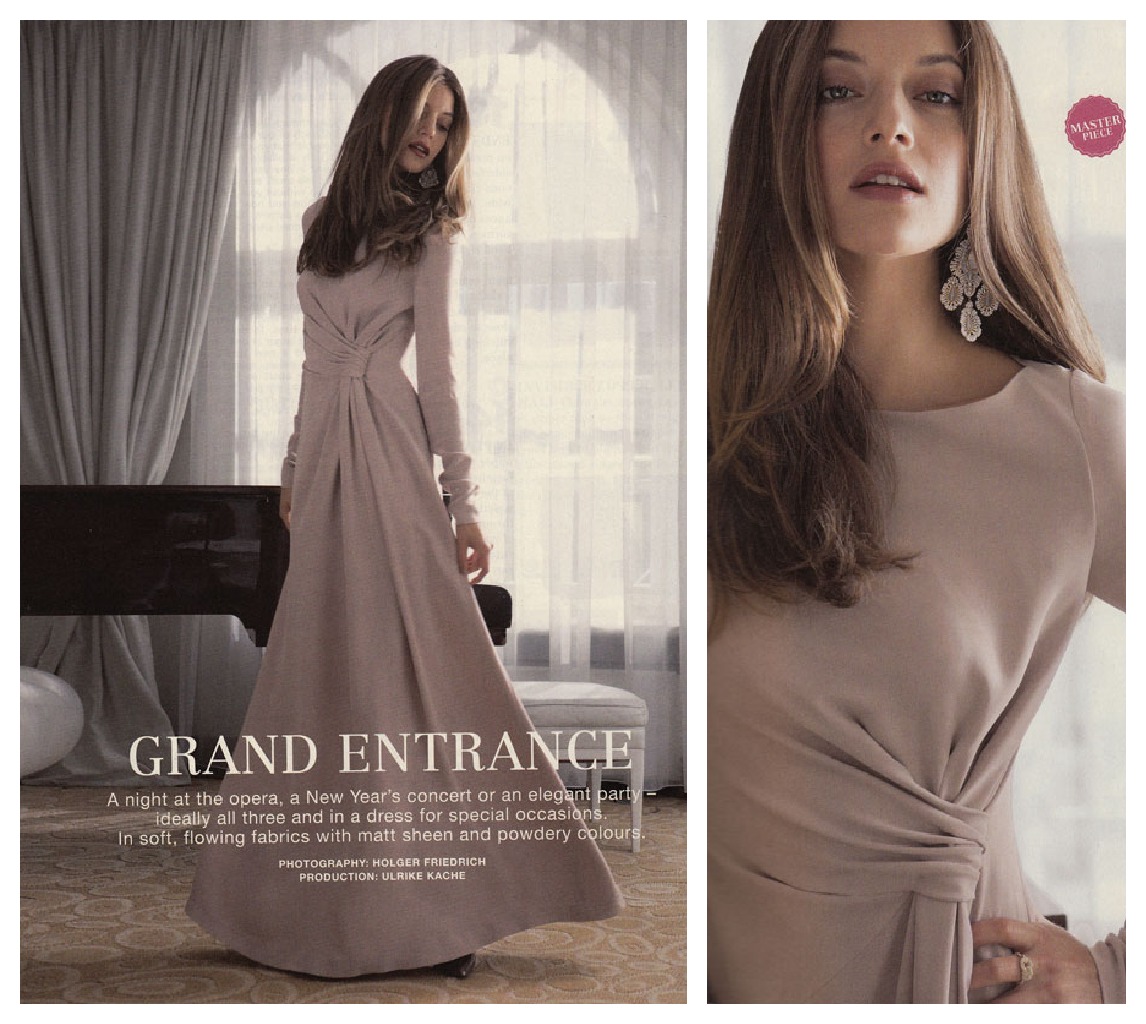
This dress certainly makes a ‘Grand Entrance’ when you turn to this spread. Works great as a short dress but soooo elegant as a full length evening dress. It’s made in silk crepe here. Imagine how luxurious it would feel too!

grand entrance dress

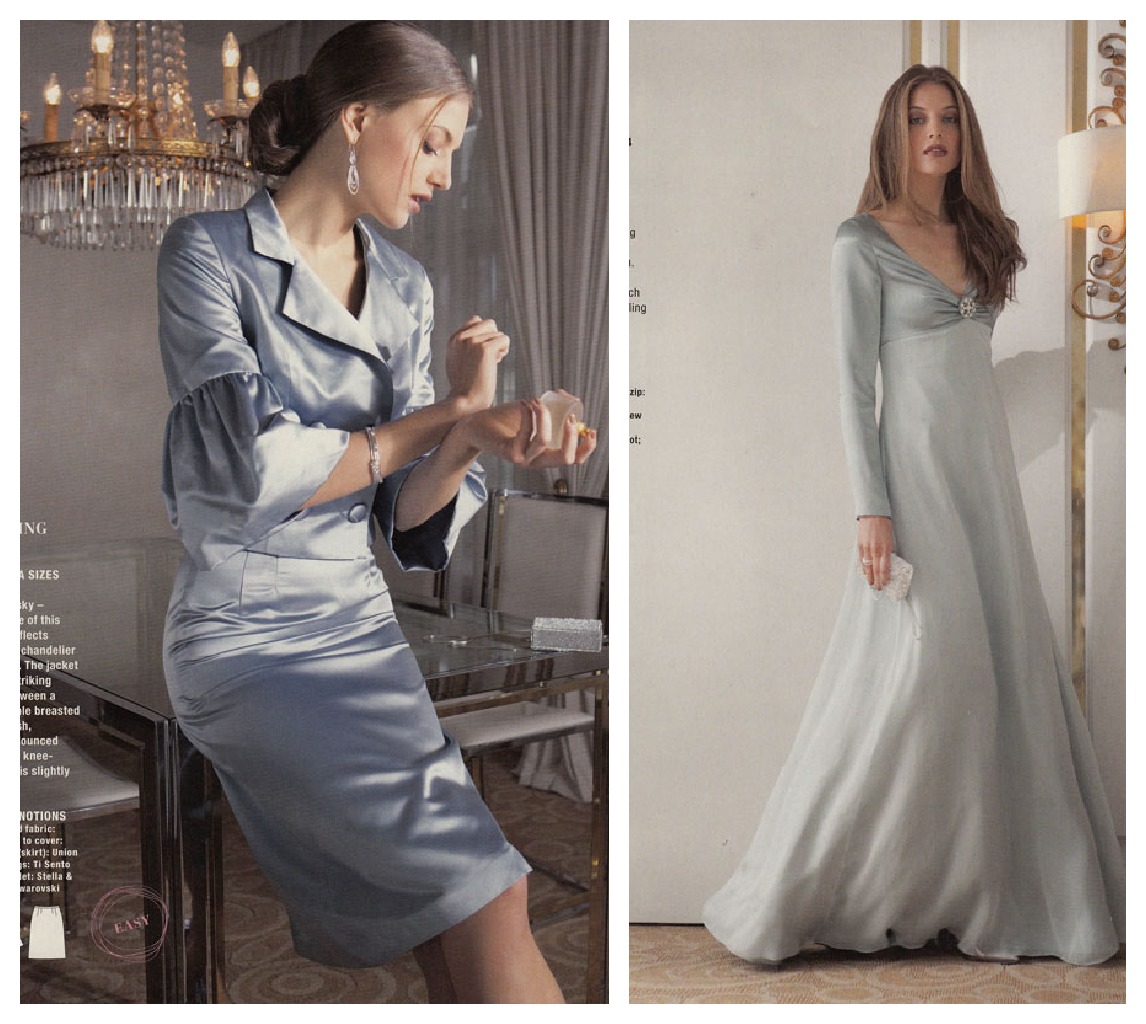
In stark contrast I fear the blue shiny combo on the left is a bit wrong! Luckily there is a pleasant distraction opposite! I really like the simple cut of this dress. A variation of the black dress at the beginning. But with the addition of long sleeves and an overlay of floaty chiffon it is transformed into  and enchanting swoosh of loveliness! I do have a little issue with how the neckline seems to be pulling though. Anyone know why this might be happening?

chiffon dress

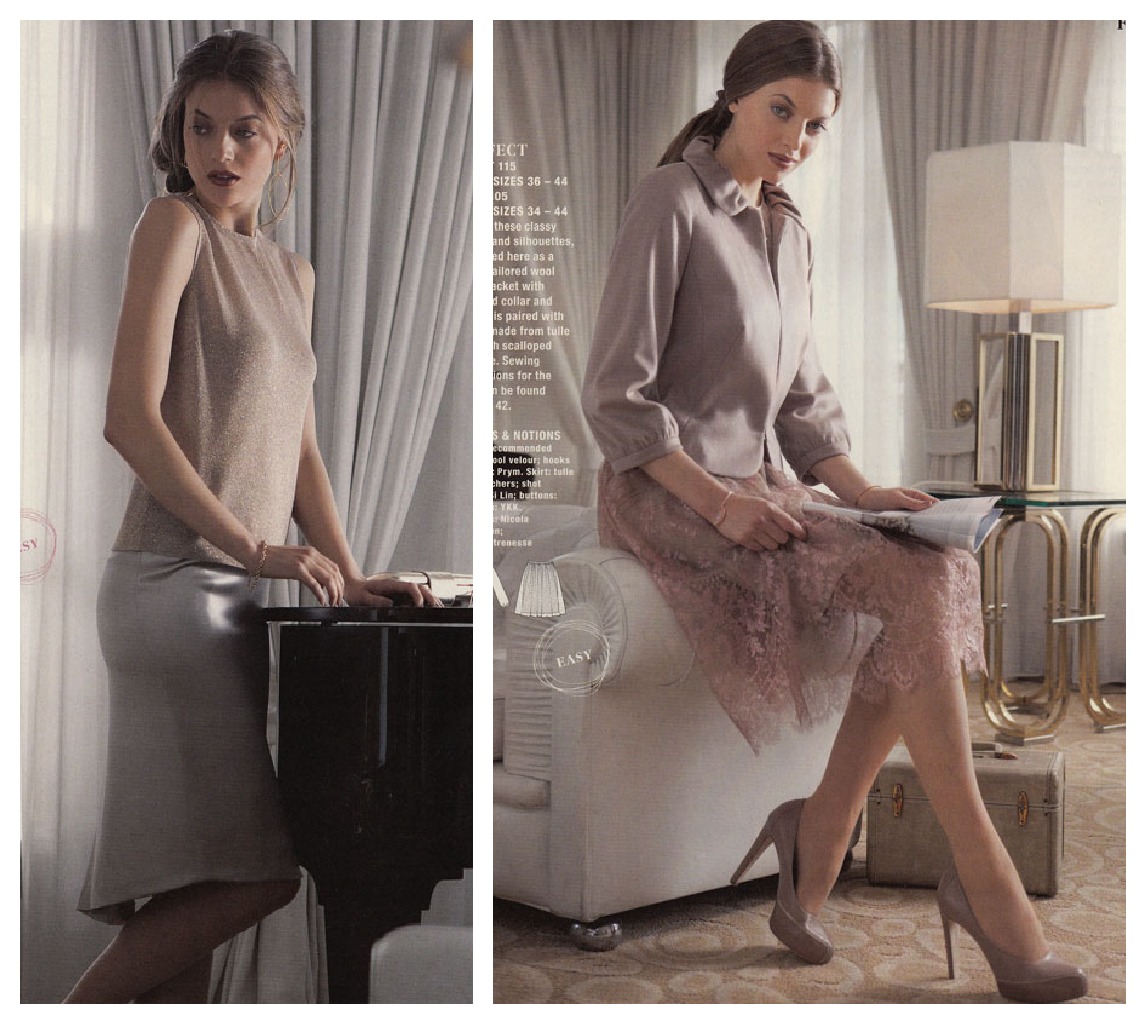
Here’s a couple of real simple to put together outfits. Well, Im sure the jacket is a little trickier but I do  think it would be worth any amount of hassle to be snuggled in wool velour. The gathered collar and three-quarter sleeves are gorgeous features. Rose and gold is quite a sophisticated colour combo too.

easy patterns

Oh and here we are. My favourite bit! The Vintage pattern. A very stylish French couture look. Though I like a nice bouclé fabric, especially one with a metallic thread, I think that gorgeous design feature at the front bodice is lost. If or rather when I get round to making this beauty I will definitely be employing a plainer wool fabric and keep it closer to the original.

vintage pattern

There’s  a few treats in the plus section. Not least of all this hot LBD. Flattering sweetheart neckline and some glamourous gathering at the hip. Oh to have those curves!

plus section

Well that just about wraps it up for the clothes section but there are lots of extra crafty projects too, just to get you in the spirit of the season!

Thanks for swinging by. Hope you get some sewing in over this busy time. Till next time, toodlepip! xxx

A cape for Poison Ivy

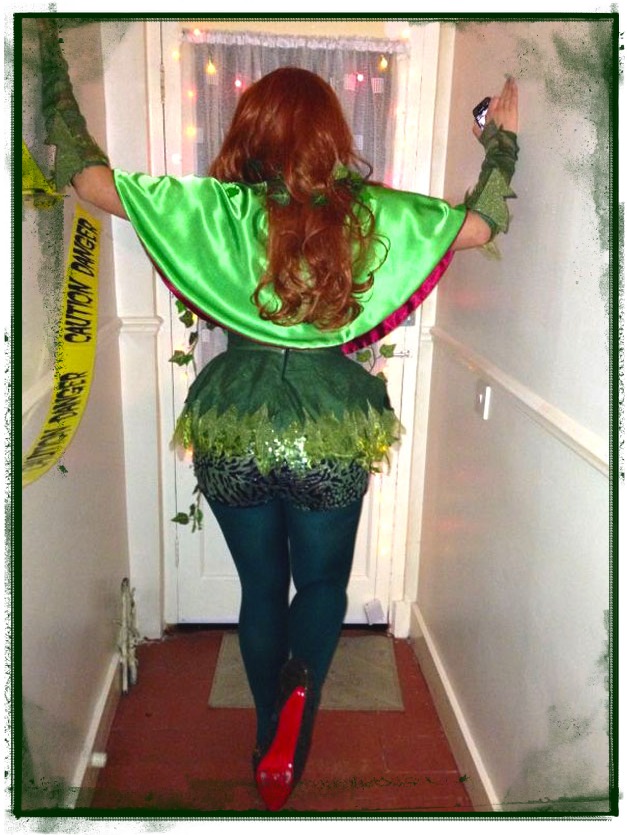
poison ivy front

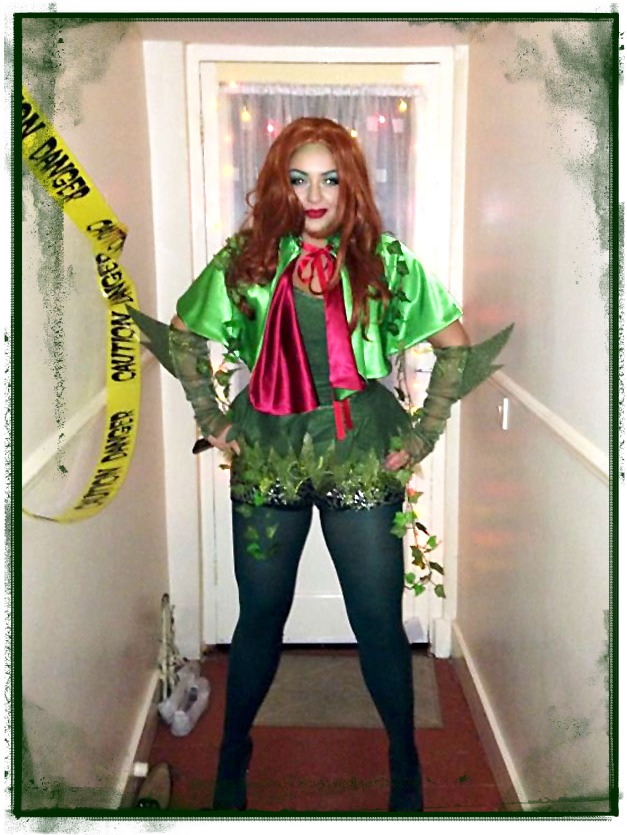
Meet my biggest little girl! Hardly a villain but seriously rocking the whole Poison Ivy thing!

It’s not often I get asked to contribute to her wardrobe. It is in fact never! So I was very honoured by the request to make a capelet for her Halloween costume. Yes I know this is a bit late in the day, soz, but I wasn’t allowed a sneak preview on the day (something to do with me being an embarrassing mum at her last party I would think!) and had to wait patiently for photographic evidence so I could share it with you.

poison ivy back

It was a very fun and quick project and even ‘biggest little’ was impressed! If you knew her like I do you would know how amazing that is!

poison ivy

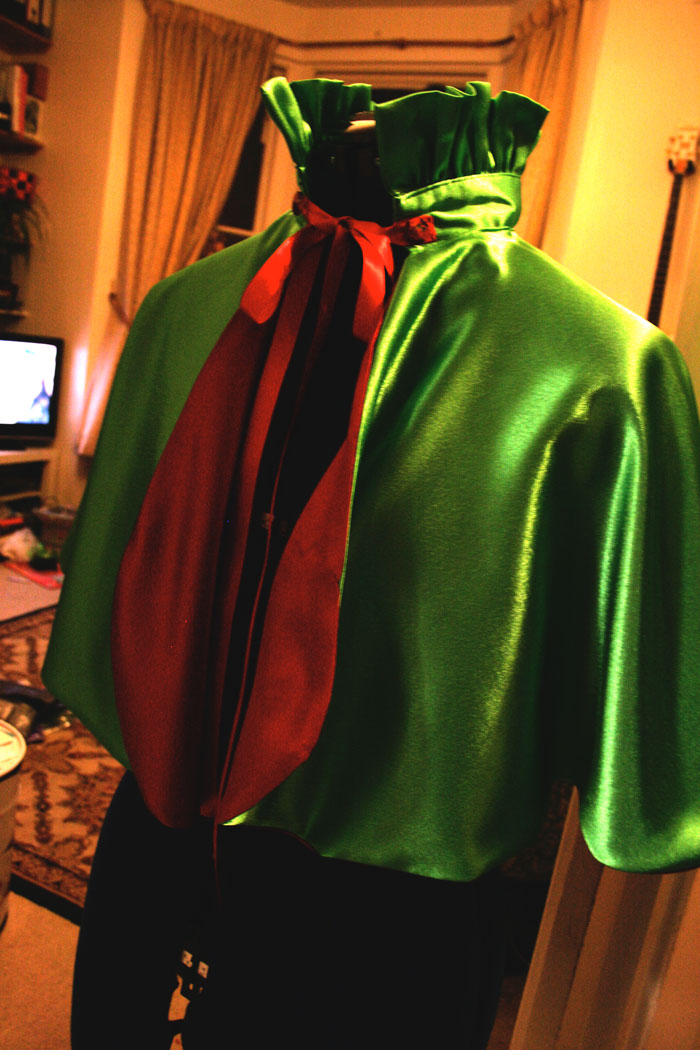
Here’s a better picture of the stand-up collar. You cant see it for all the red luscious locks!

cape on manequin

The exterior is a bright green poly satin fabric with red satin lining and I used some glitzy buttons at the neck to cover the ends of the ribbon. Should have sewn them in the collar stand really!

It was a very simple project for quite an effective fancy dress accessory…

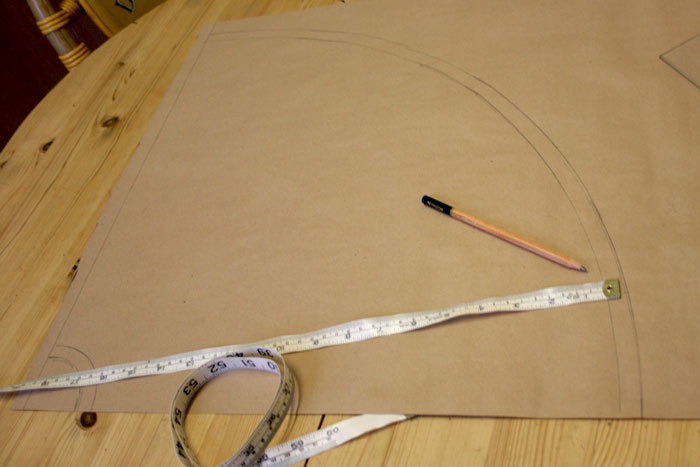
First I measured the neck (plus ease) and the measurement from the neck, over the shoulder to just below the elbow. Using Pi (22/7) I worked out the radius to draw the neck hole and from that circumference I could mark the length of the capelet and draw the circumference at the hem (plus SA)

circumference formula

Have you ever wondered what that little hole is for at the end of your tape measure? Well I sure have found a use. If you position and hold down the tape measure at the distance required, on the centre point, or corner of your paper, you can put the point of a pencil in the hole at the other end and draw the arc of the circle. Its not as accurate as a compass but I don’t have a set of compasses that large and this method was good enough!

draft circle

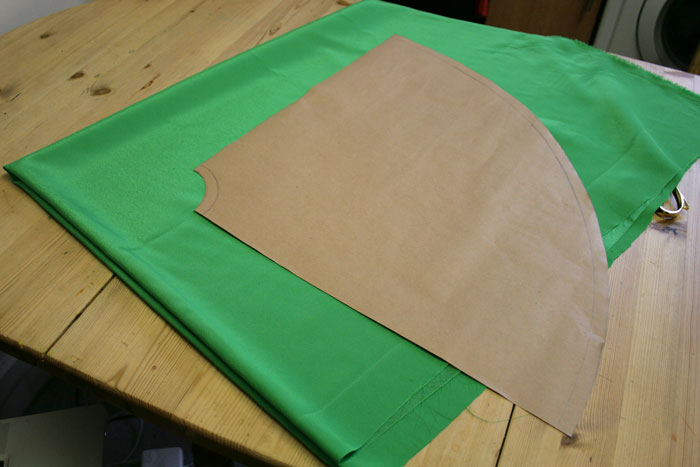
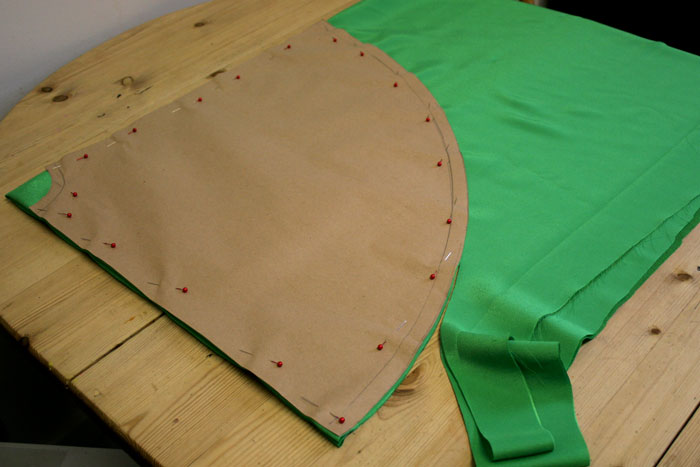
I folded the fabric into quarters and pinned the pattern, making sure it was butted to both adjacent sides.

folded fabric

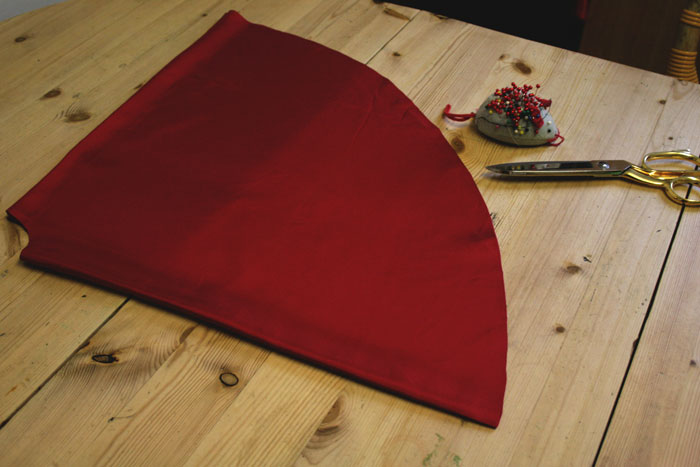
pinned patternI did the same with the lining and cut out. This is not my favourite fabric to work with, I hasten to add!

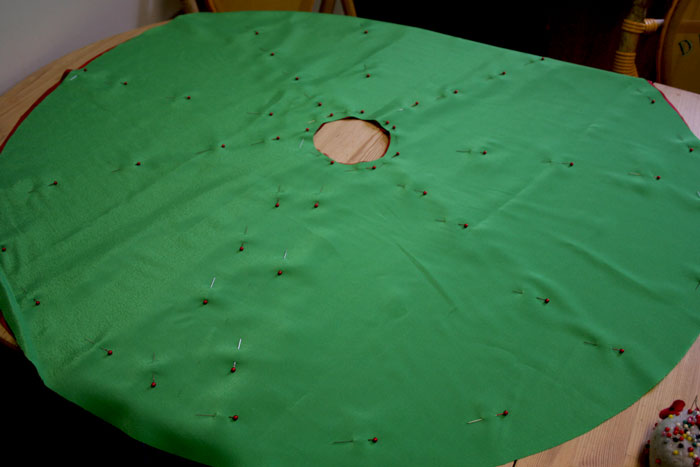
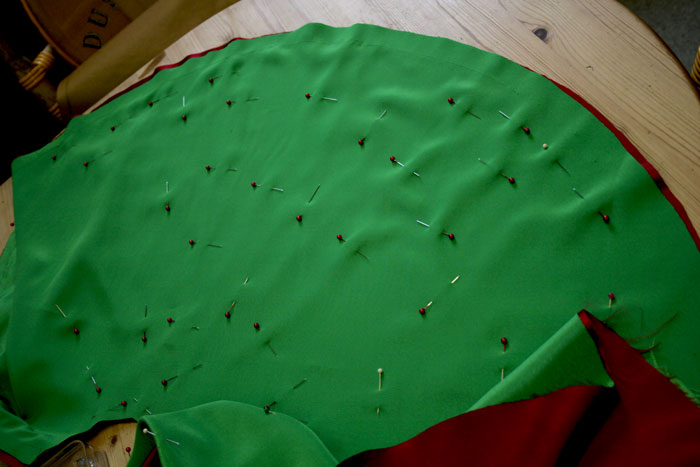
cape liningNext up, I pinned the self to the lining, right sides together, using lots and lots of pins. I am telling you, this is soooo not my favourite fabric to work with. It slipped and slid all over the place!

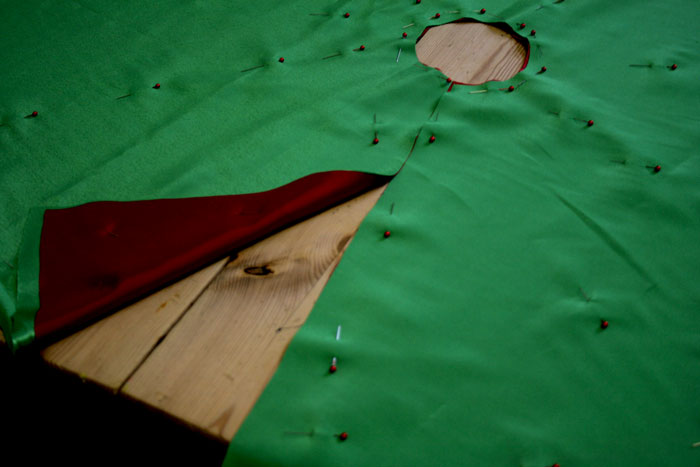
pinned lining and selfThen I cut the front opening. You can see just how far out I was with the cutting/positioning of this slippery stuff!

cut opening

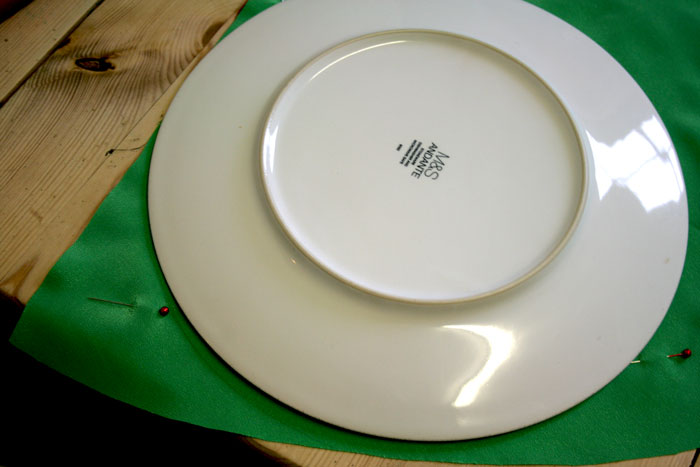
But I saved the situation with a genius idea to round off the corners! And note my next exclusive dressmaking tool…. a dinner plate!

round cornersI stuck in some more pins before I attempted to sew around the base hem and up the front openings. But it still took 3 or 4 attempts. It was like a couple of magnets repelling against each other!

more pinsI left the neckline open while I constructed the collar. First I made the collar stand. The measurement for which was the neck measurement (plus ease) by 5 inches (I think!)

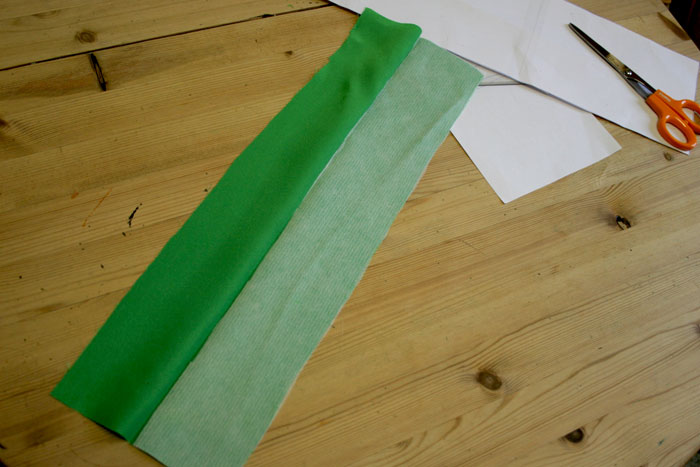
I folded it in half, lengthwise and applied fusible interfacing to one side.

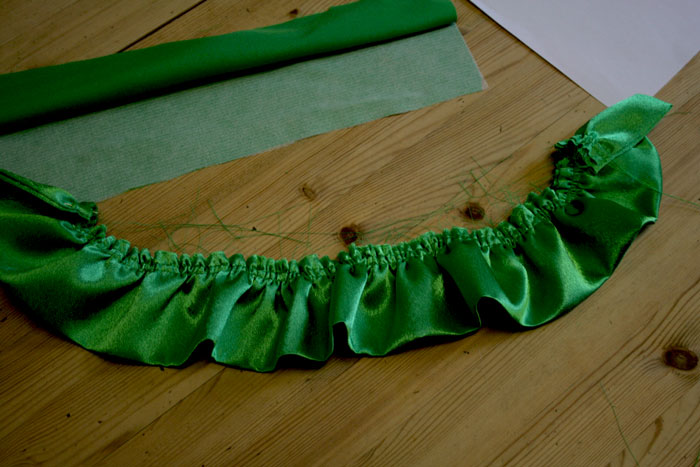
interface collar standTo make the ruffle, I cut a strip the same width only twice as long, folded, pressed and seamed the short ends, right sides facing. I gathered the raw edges to the same length as the collar stand.

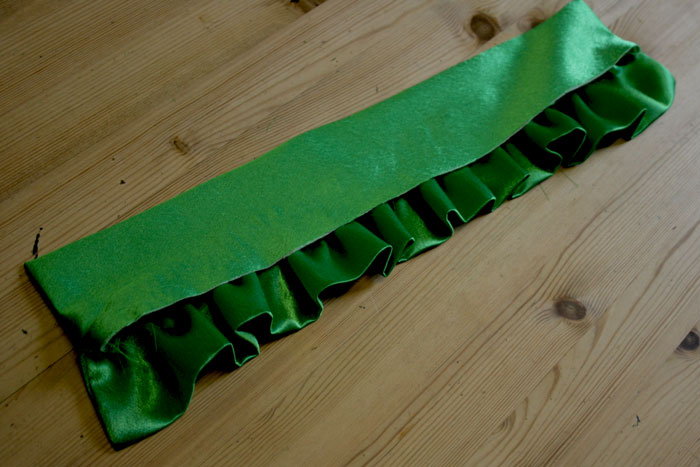
ruffleI don’t have pics for the next stage but hopefully it will make sense. I sewed the short ends of the collar stand together and turned right side out. Matching raw edges, I pinned the ruffle to one side of the collar stand, right sides together, careful not to catch the underside.

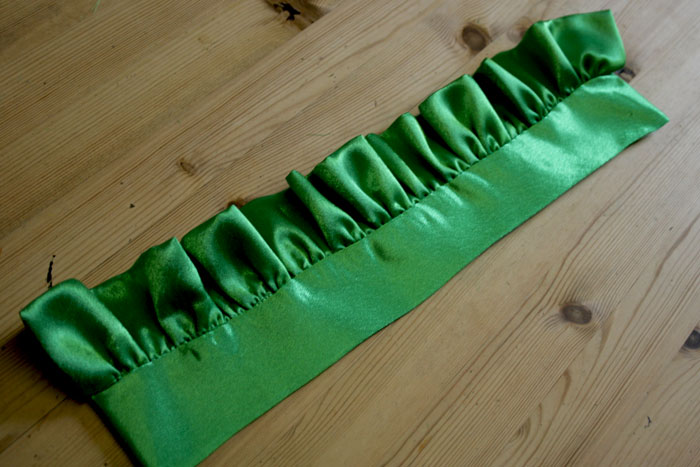
collar ruffleI turned the ruffle up, hiding the raw edges inside and gave it a press to keep it in place. I then folded in the seam allowance from the remaining side and topstitched in place.

finished collarAgain I am missing a few pics, but to finish off I sewed the base of the collar stand (the folded edge), right sides facing, to the neckline of the self side of the cape. I then folded and pressed in the seam allowance on the lining and top stitched to the other side of the collar, very close to the edge.

poison ivy cape

Buttons and ribbons were then sewn in place.

Hope this gives you some insight. So sorry for the missing pics. I will be more diligent with my tutes next time!

This is indeed a very fun and quick make… but I would advise a woven fabric just for sanity’s sake!

Whirligig quilt block

whirligig quilt block

I have been seriously neglecting my quilt blocks of late. Am more behind than ever but heyho… I will have a lovely quilt on my bed one day. Just not some day soon!

Introducing the Whirligig block, number 20 from issue 22 ‘Art of Quilting’. Though issue 21 supplies the batting and instructions on how to join the first 6 blocks, I feel the need to get a few more blocks underway first.

Inset seams are second nature now. Not so daunting any more. Which is lucky because there are a few involved here!

The ‘orange blossom’ triangles are first sewn to the gingham pieces. Important to mark the 6mm seam allowance on the triangles before making the first seam. Then you know at what point to stop, where the seams meet. The ‘red daisy’ pieces are then joined to the triangles and then the final seam to the blue gingham completes a quarter of the main block. Once they have been arranged in position, the bottom two quarters are seamed together and then the top two. They can be chained and then snipped apart. Finally the two halves are joined together and the centre seam pressed open with the ‘toe’ of the iron.

I have to say this is my least favourite block so far. I think its the fabric colours. They create such a clumsy shape. I did consider selecting different fabrics but I wanted it to be consistent with the rest. The design is meant to be characteristic of the propeller look but it is very interesting how the design changes with use of pretty vintage pastels with more contrasting triangles, which seem to draw the eye more to the centre pinwheel.

whirligig block in pastel colours

Block Facts:

Name: Whirligig
History: The combination of printed fabric and gingham is very typical of the feedsack quilts of the 1930s.
Level: Some experience needed to create neat set-in seams
No. of pieces: 16

Progress report:

Block 1: The Double Four Patch
Block 2: The Whirlwind
Block 3: The Sailboat
Block 4: The Shoo-fly
Block 5: The Trafalgar
Block 6: The Windmill
Block 7: The Chequer Square
Block 8: The Diamond Square
Block 9: The Cactus Pot
Block 10: The Sawtooth Star
Block 11: To come!
Block 12: The Windmill Sails block
Block 13: The Basket of Flowers block
Block 14: Susannah
Block 15: Road to Oklhahoma
Block 16: Chequer Star
Block 17: Nelson’s Victory
Block 18: Fair and Square
Block 19: Diamond Pinwheel
Block 20: Whirligig