I had the perfect sewing window today – Little Miss O at a party for 4 whole hours and a day far too chilly to hang outside for my liking!
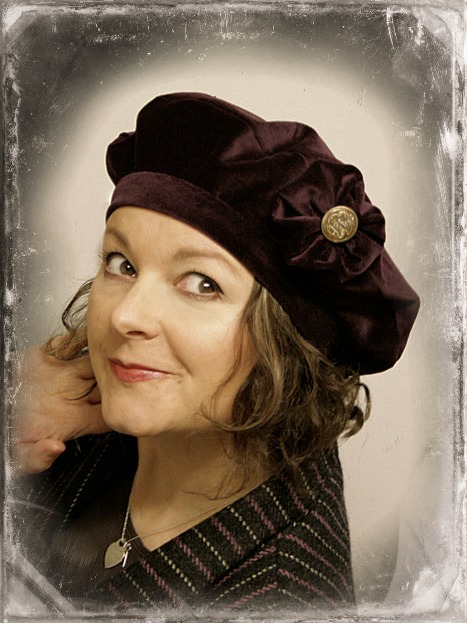
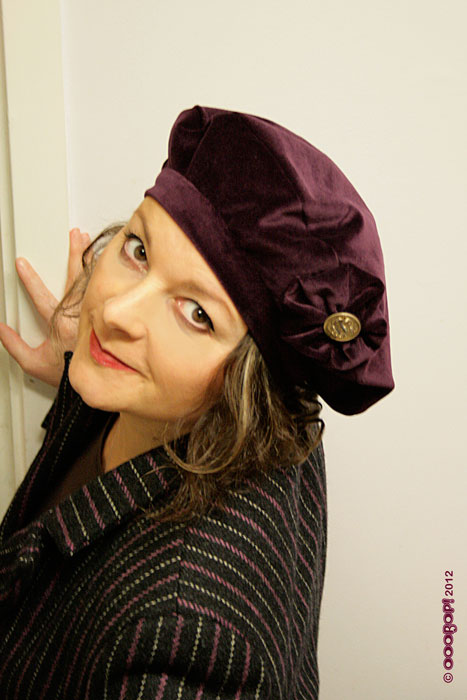
But I wont dis the weather – that would be far too predictable for a Londoner – I will embrace it. And so I hatched a plan to make a hat. I really don’t know how I get through every winter, convinced I don’t suit a hat, and freezing my poor little pixie ears off for the sake of not looking like (more of) an idiot!
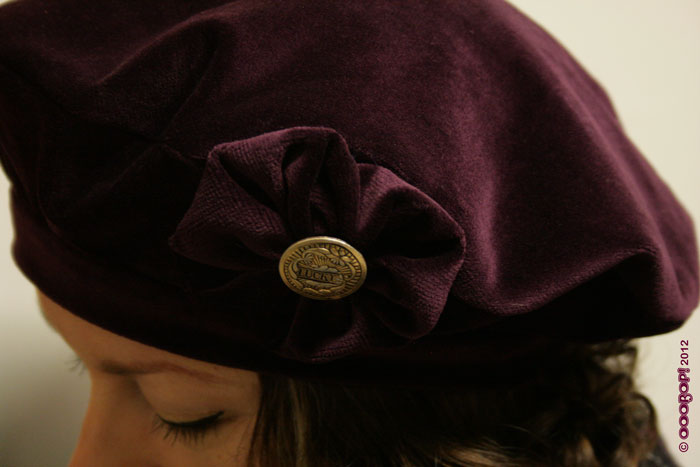
So spurred on by the prospect of a toasty bonce coupled with an opportunity to make a minor stash bust but best of all, make a perfect showcase for one of my favourite buttons, the mini mission began!
Mr O had a similar hat – albeit a bit more manly! – so I set about drafting a pattern. I have quite a big head so this was another good reason to make one. If ever I find a hight street hat that I vaguely like, the chances are it will be too small!
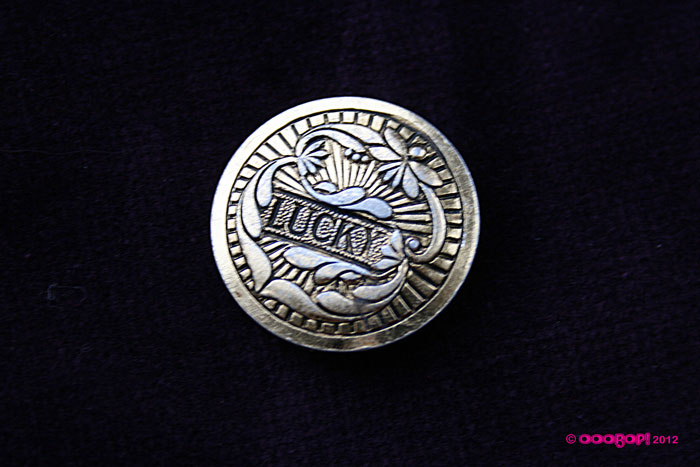
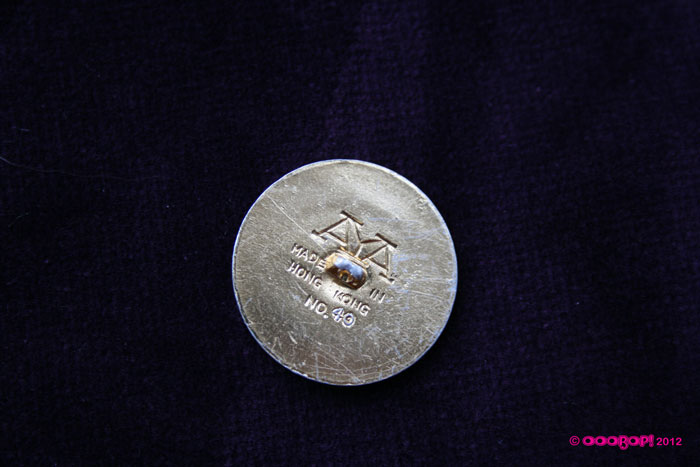
Little Miss O found this button in a biscuit tin at a vintage fair in Islington last year. Just a single lonesome button with the word ‘Lucky’ on it. Could sure do with some of that ‘luck’ stuff right now so here’s hoping!
It’s got an interesting stamp on the back but I can’t find any reference on line from where it might have come from.
To create the decoration, I made a ‘yoyo’, my first one in fact! For those that don’t know, a yoyo is a circle of fabric (in this case the circle that was cut out for my head hole!) gathered close to the outer edge and pulled tight. The raw edges are tucked inside and some reinforcement stitched sewn. Of course a statement button is a brilliant idea to cover up the scruffy bit in the middle. Velvet is not as manageable as cotton but a few needle pricks later, the result was very acceptable!
I wore my new hat down to our ‘local’ for dinner tonight but didn’t take it off. I was a bit worried about the hat-hair issue. But hey, guess what happened when I took it off when I got home?! Hair looked better than it did pre-hat!
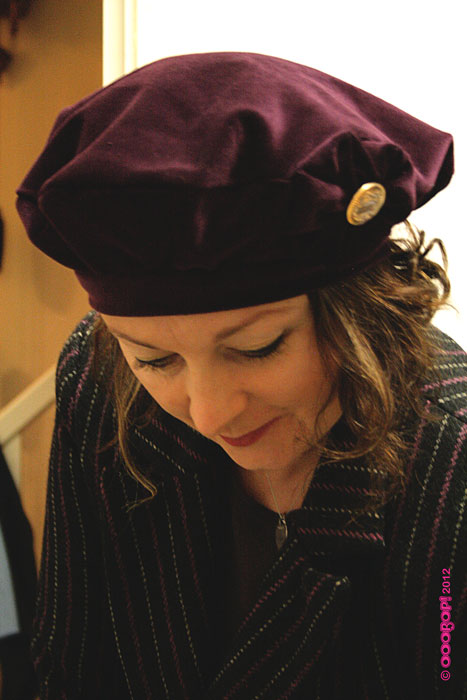
The outer fabric is a cotton velvet, wonderfully donated to me by a friend who was having a clear out. There are many more metres so I am contemplating a matching jacket! Contemplating I said!!
The inside is fully lined with a matching poly lining so it feels really neat. The band was machine stitched, right sides facing and then turned inside like giant bias trim and hand stitched to the seam line, using an uneven slip stitch. The stitches were quite small and sunk into the pile of the velvet so I am very pleased with the results.
I’m pretty sure this kind of hat will go with vintage or modern styles. Just need to make a few more in different colours!
Thanks to the wonderful Mr Ooobop! (of course) for the fabulous photos!
First I must thank you all for your lovely comments on my initial post about the finished jacket. I’m so touched and I love that warm and fuzzy feeling I get when they find their way into my mailbox!
So as promised, here is some nitty gritty detail from the project for those that might be considering this jacket for the first time.
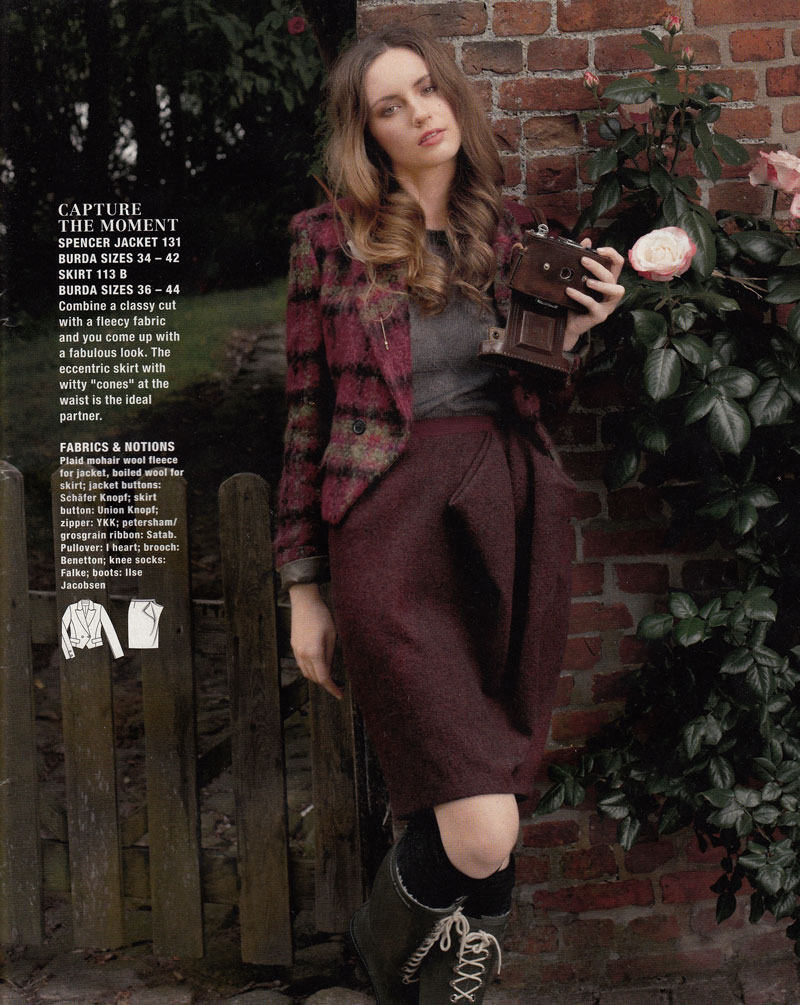
Burda jacket #131 11/2012
Though I am pleased overall, with the results. I can’t help being niggled that more tailoring techniques weren’t employed. I’ve only myself to blame. I could have researched them myself but there’s always a next time!
The jacket is cut from pieces #131, Burda Style magazine 11/2010 but the construction details are from #130. The only difference being that I chose the full length sleeves with vents… and proper working buttonholes… glutton for punishment, me!
I made the toile back in February and was intending to make adjustments to the waist only. But I got worried about it’s ‘snugness’ and just went up a size in the end. A little bit chicken perhaps, but also concerned that I was more likely to be wearing a few layers underneath in the colder months!
It is essential that you make a toile. There is so much work involved in this, you don’t want to get to the end to find it doesn’t fit!!!
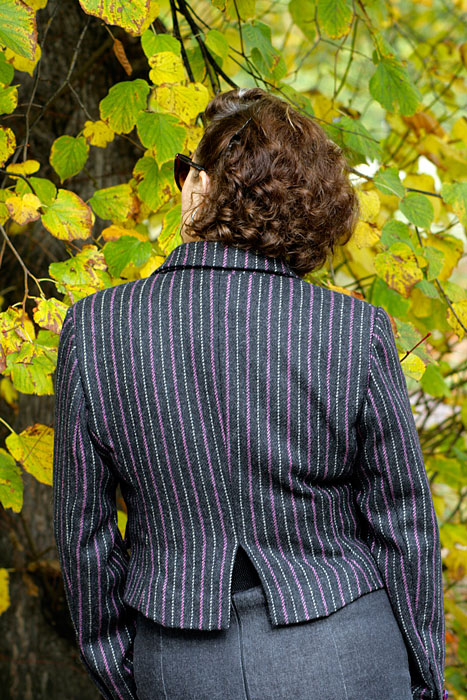
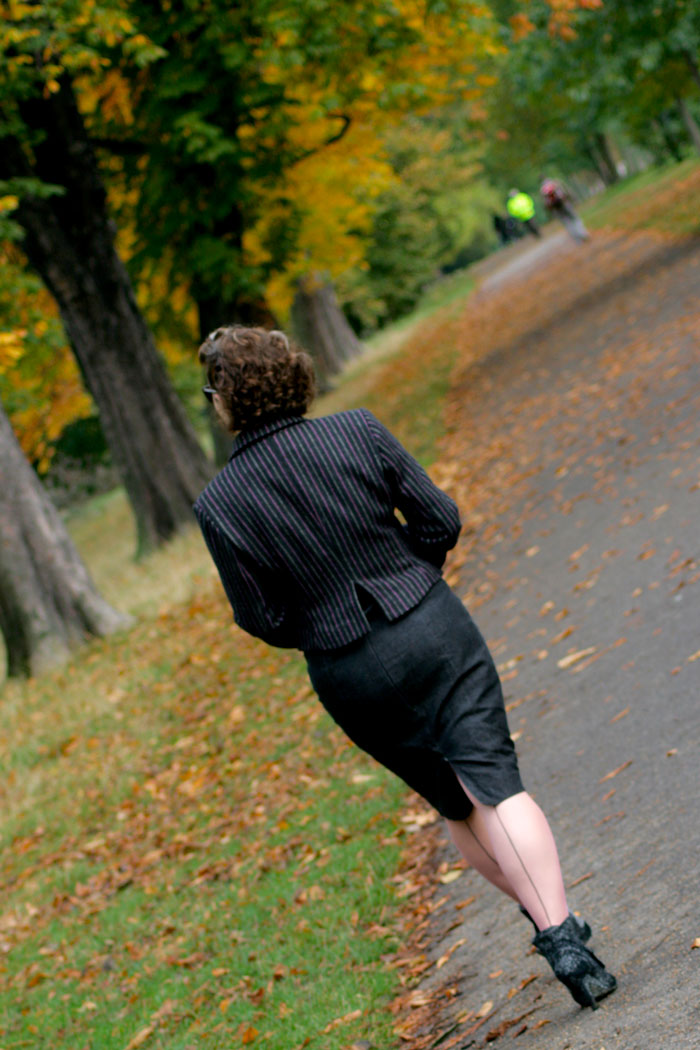
My first slip up, that I DIDN’T clock until I got round to dealing with it, was the back vent. I am so used to adding the statutory 15mm seam allowance to each edge that I clean forgot to add 4cm as specified, to the vent openings. Doh. I could kick myself. It doesn’t look so bad in the photos but I know that it isn’t created properly. It is intended as a ‘split’ but would have been so much neater with an interfaced proper allowance. So please remember to do this if and when you cut yours! I would even go as far as to make it a vent rather than a split. But that opens another can of worms with the lining!
back split that really wants to be a vent!
The miniature pattern layouts indicate what pieces are to be interfaced with fusible interfacing. I did toy with the idea of sewing traditional interfacing. I liked the idea of employing some traditional skills but I agreed with myself that I was embarking on a big enough journey and that the fusible stuff would be just as good for what I was trying to achieve.
And so the interfaced pieces included: centre front; side front; outer collar stand; under collar; back facing; outer pocket flap; neck and armhole edge of centre back.
The main construction of the body came together very easily. Darts seams and pressing.
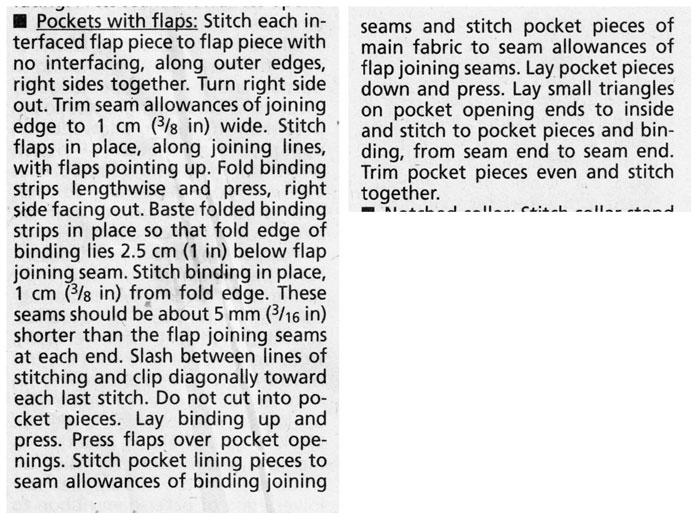
But then came my reality check. Welt pockets with flaps. Needless to say I practiced these before the real thing. You can see how I got on with this here. Well worth checking out YouTube or the Burda site for instructions. I challenge anyone to get the gist of welt pockets from the following instructions!! Or it could be just me!!
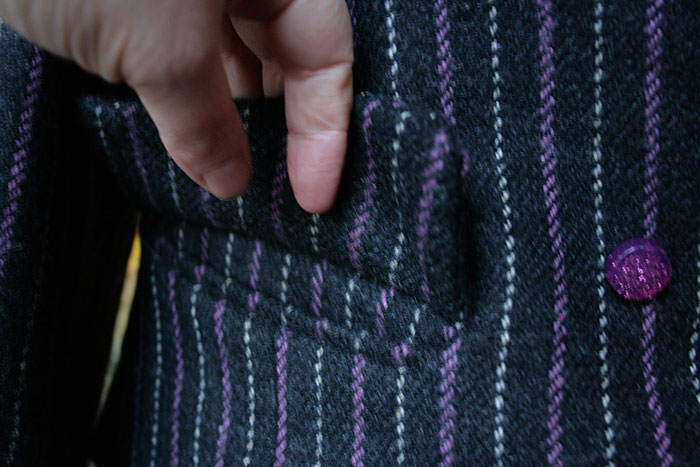
I am over the moon at how they turned out in the finished fabric. I don’t intend to put anything in the pockets, for goodness sakes, don’t want to misshapen them! But I am so proud when I slip my hand inside. Feels so special! And no one gets to see that lovely welt under the flap, except moi! Though I have pointed it out to a few of my friends who smile loyally with raised eyebrows!
welt pocketpeek at the pocket lining
Next up was the notched collar. This was actually not as scary as I was anticipating. I did pin and I did baste before stitching and it all worked out just fine. The stitches sank invisibly into the wool when I machined the seam so I didn’t want to risk having to unpick at any point! Neat trimming and clipping is essential and it is also important to take care when you ‘push out your points’ Very easy to push a pointed implement through the point of the lapel, (especially if you are using soft wool) and ruin everything. It’s worth being slow and patient with this part because it is such a lovely sharp feature. You’ll be really chuffed when it comes together at this point.
pointy lapel and notched collar
There was a suggestion to sew the pointed lapels to the underside of the collar to keep them in place but I didn’t really feel this was necessary for the weight of the fabric I used. I like being able to turn up the collar when its chilly!
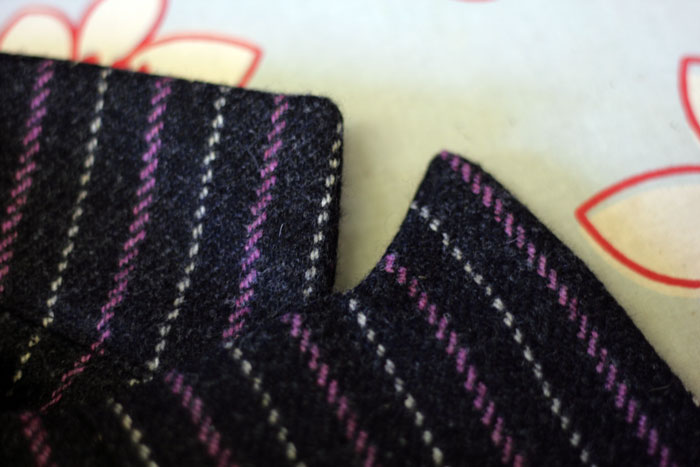
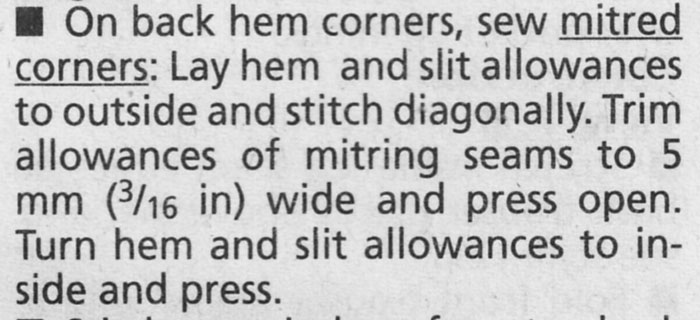
Now shall we talk mitred corners? I’m so glad these were included. It makes so much sense and makes such neat corners. Nothing else will ever do from now on! Of course it goes without saying that you won’t survive with these instructions, especially if this is your first time…!
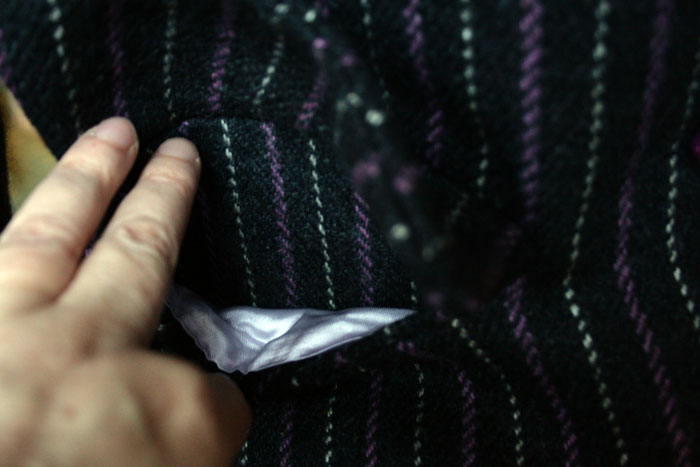
I mitred the sleeve vents and the back vent in the same way. Though I had created a bit of a monster on the back vent by forgetting the extra allowance. Please don’t forget this!!!
not enough SA on the vent but check out those mitred corners baby!
When I came to set in the sleeves I realised I had clean forgot a couple of notches. You will never work out how to inset those sleeves if you forget the notches, I can tell you. Mostly because I tried… and failed… 3 times!!! Till I relented and placed the pattern pieces over the made up sleeves and marked them.
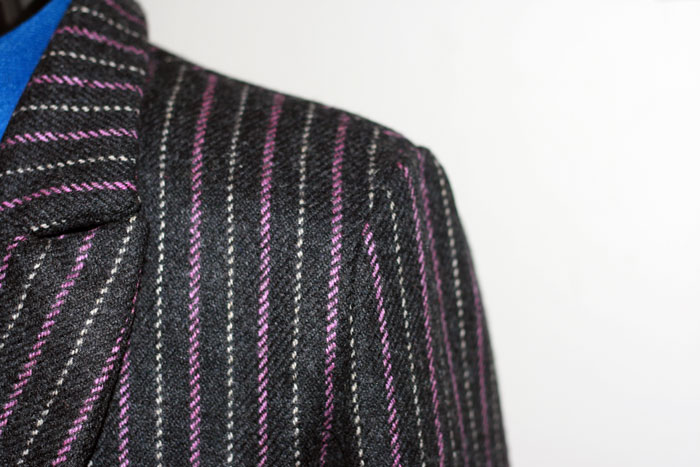
Once I’d put the shoulder pads in, I tried it on and grinned from ear to ear. I was definitely on the home straight! But one niggling factor was that I didn’t like how the sleeve just ‘hung limp’ off the shoulder. I had heard mention of sleeve headings before but obviously never had to take full notice. So I found this little tute in my book Readers Digest: New Complete Guide to Sewing. This book has been so useful and really didn’t let me down this time.
Make a sleeve heading:
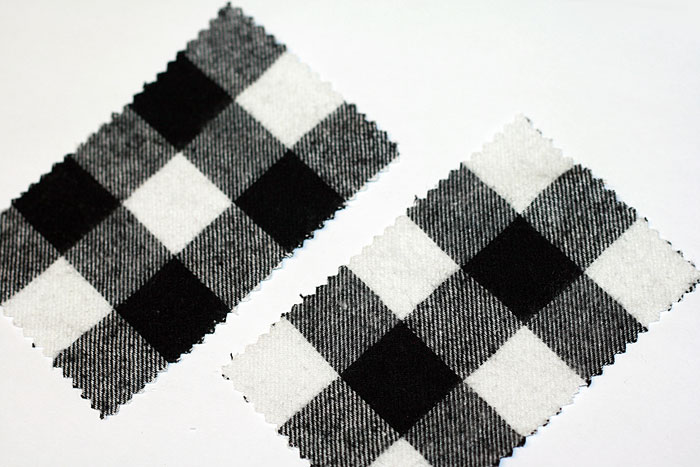
Cut 2 pieces of 3 x 5 in (7.3 x 12.5 cm) pieces of lamb’s wool, flannel, or polyester fleece. I had some leftover cotton flannel from my son’s pyjamas. Probably not as weighty or as poofy as lamb’s wool but it was better than nothing!
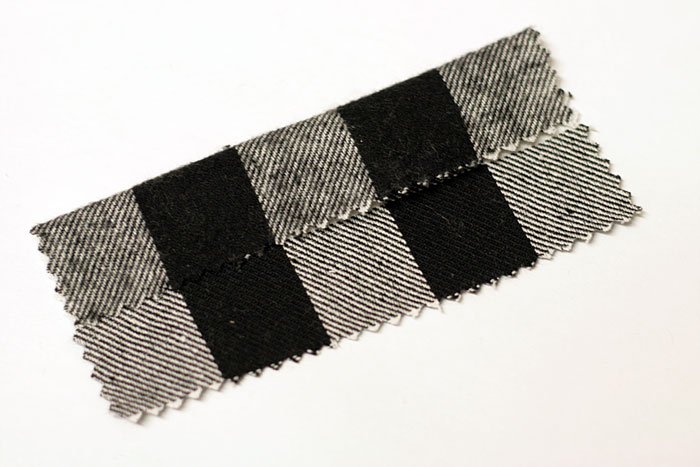
sleeve cap pieces
Make a 1 in (2.5 cm) fold on long side of each piece. How lucky is this. My fabric had 1 in square pattern!
sleeve cap fold
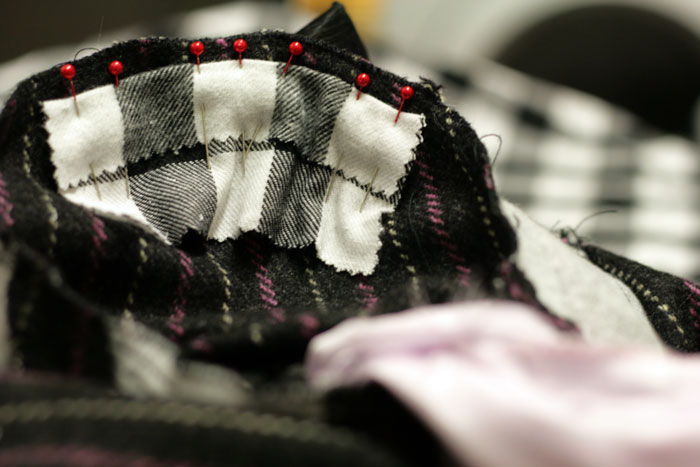
Centre and pin heading to wrong side of sleeve cap with fold against seamline, wider half of heading against sleeve.
sleeve cap pinned in position
Whipstitch fold of sleeve heading to sleeve seamline. Heading now supports and rounds out sleeve cap.
without sleeve cap
The difference is subtle but is hugely important for my self satisfaction!
with sleeve cap
Before I lined the jacket I neatened and pressed all the seams. I did wonder if you have to neaten the raw edges, after all they wont show but I was worried about it fraying inside with wear and if it might eventually have a knock on effect to the seams coming apart. Probably over worrying but better to be safe than sorry was my own conclusion. But here presented my next concern. As much as I pressed this gorgeous wool, the seams would not lie perfectly flat throughout and I knew that would affect the overall shape and create a lumpy lining. And who would want lumpy lining?!
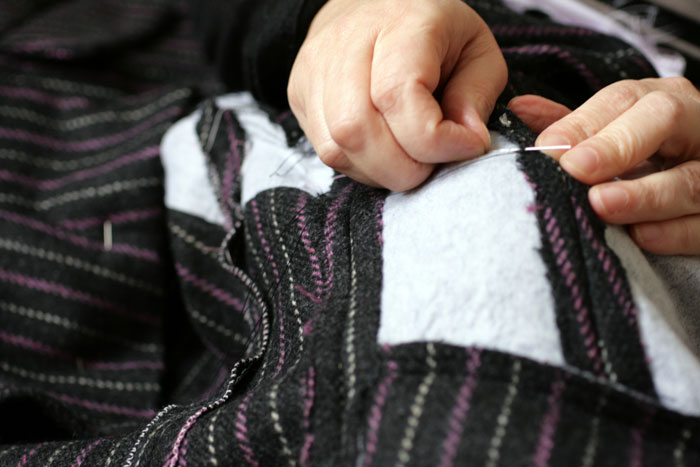
So I decided to stitch the seams down, like a good tailor lady. But hey! Guess what little tailoring trick was missing. NO UNDERLINING!!! Not that I have ever had to underline anything to date. But I have heard about it. I have wondered why you would want to but now it was blindingly obvious. My fabric was sturdy enough to live without it but how much easier would it have been to sew the seams down flat onto an underlining. I will definitely underline next time I make a jacket and I wholly advise you to do this even if you think your fabric is sturdy enough. It makes sense you know!! Fortunately my fabric was quite thick with a forgiving texture!
stitching seams down sans underlining
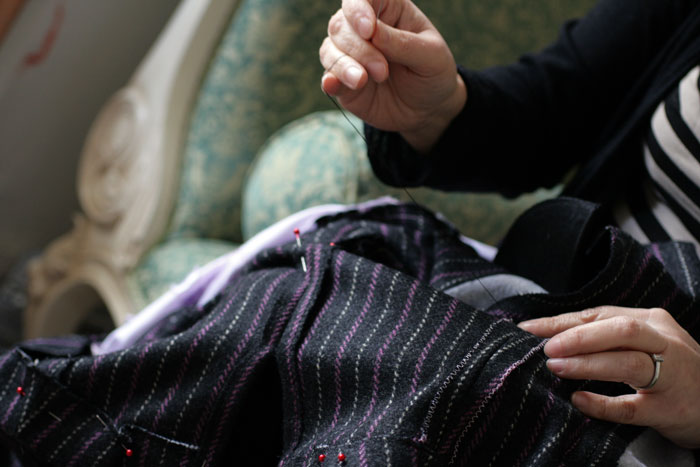
I found it was much easier to do, over my knee, whilst watching The Paradise! And also safer to stitch onto the interfaced pieces.
stitching seams down on interfaced sections
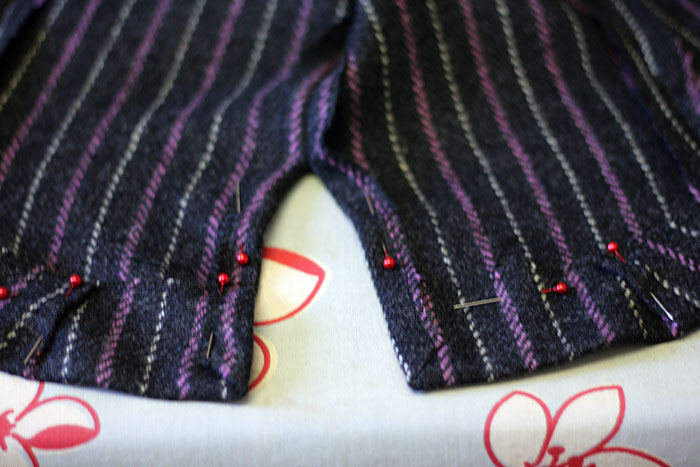
Hemming was easy with this fabric but be aware that a curvy hemline is naturally created with all those shaped pieces. To take in that excess fabric I just made a couple of tucks either side of the vent, symetrically positioned so that the finished shape was uniform. You’ll notice here that there is no evidence of interfacing. After I hemmed I remembered I was supposed to interface the hems. So I dutifully unpicked all that hand stitching, cut some strips of fusible interfacing, fused it on and re-hemmed. BUT do remember to interface the hem sections of your pieces from the start and NOT at this stage. You know it makes sense 😉
wavy hemline
So then came the lining. I had pondered a silk lining but the lilac poly satin I found was so lush I looked no further. So long as you remember your ‘ease pleat’ in the centre back, you can’t go far wrong. I can’t give to much advice about this stage because I kind of winged it!!! But what I did remember to do was to push the lining up to the hemline of the outer fabric and roll it down over itself to create more ease and allow for shrinkage. Not that poly lining shrinks but I think its general practice! I did the same on the sleeves. I’m not sure I lined the vents on the sleeves properly but it works… of a fashion!
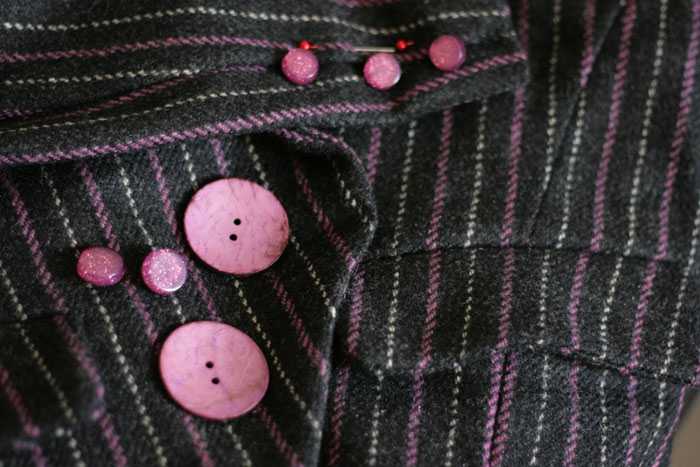
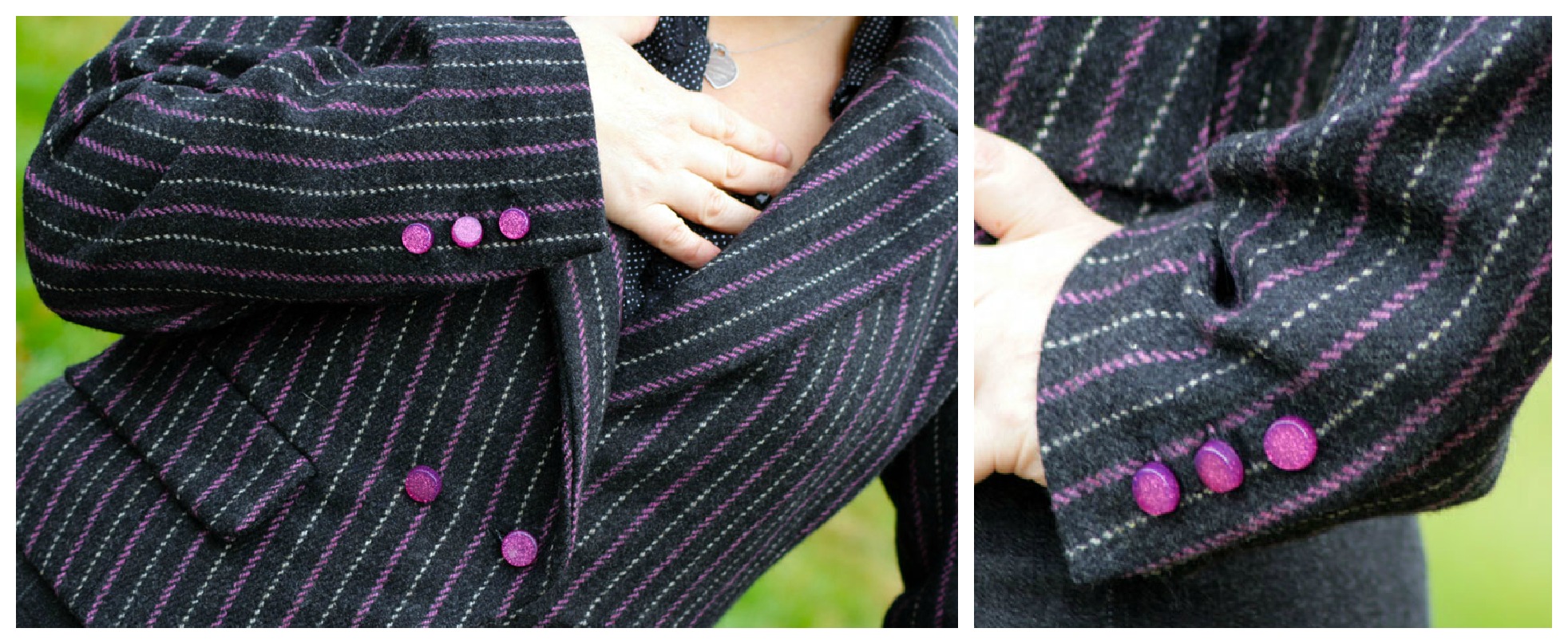
The buttons were a lucky find, though I was gutted I couldn’t find smaller coconut shell buttons. The two pictured here were way to big even for the front! So sparkly resin shank buttons it was. Lucky to find them in 2 different sizes at Shepherds Bush market. 20p each… a snip!
I WILL find a perfect use for those coconut shell buttons!
I created the buttonholes on the machine. Holding my breath as I did so. You know how it is. There’s always a chance of a wayward buttonhole! But next time I would love to try bound buttonholes. Karen did such a beautiful job with hers and I bet it feels far more special to button up with bound ones!
Well here ends my waffly post of niggles. I hope to have been of some help and not too much of a waffling bore!
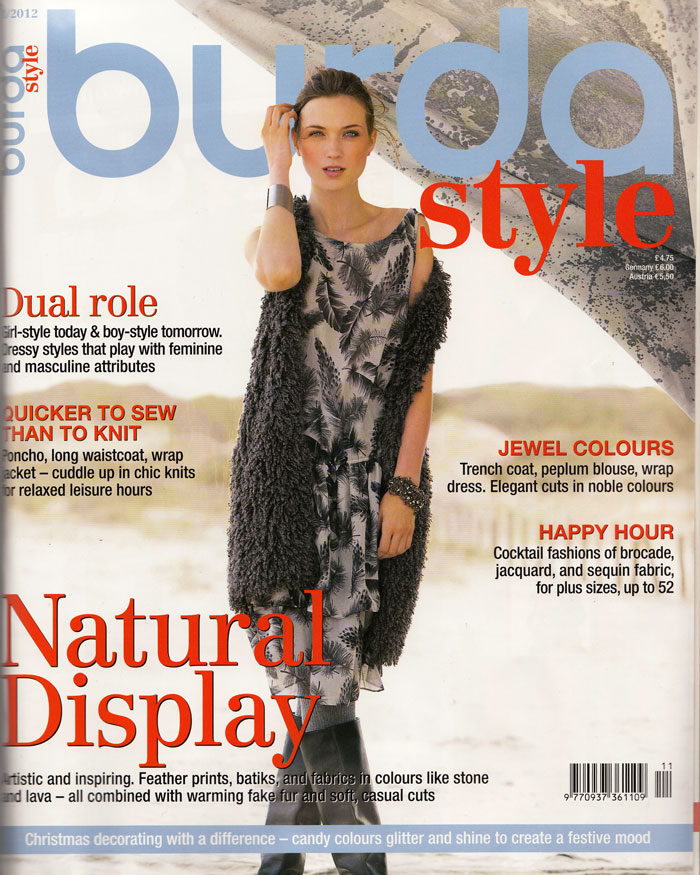
A little later than usual but I do hope that November 2012’s Burda Style magazine serves to whet your appetite and make your sewing list longer all the same!
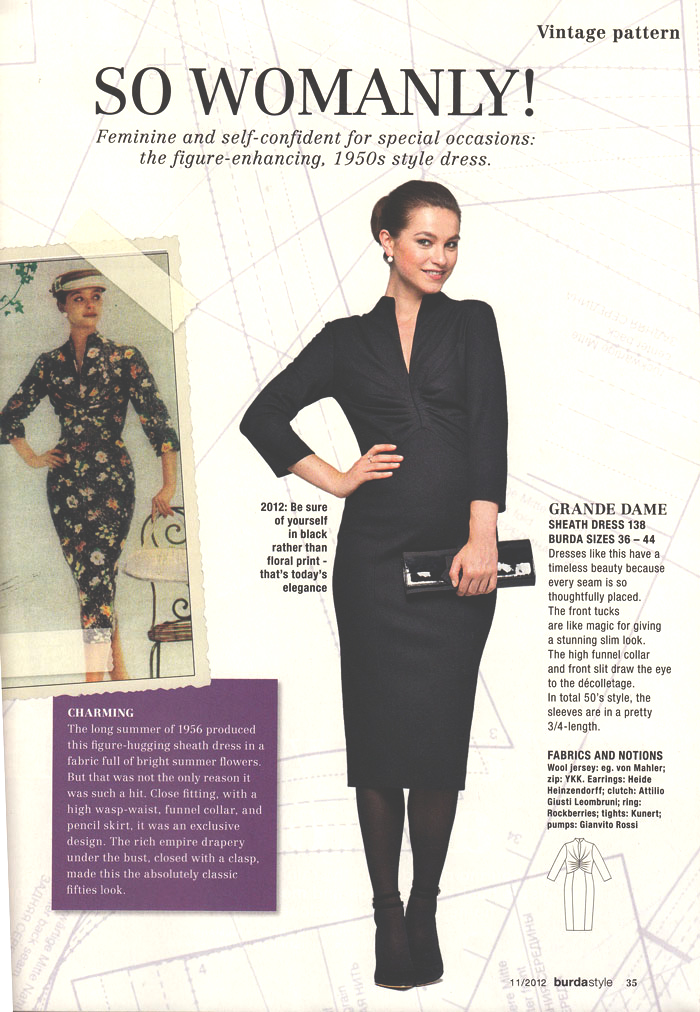
I’m going to jump straight to the Vintage pattern because that is exactly what I did in the shop and it is so totally my favourite and my best! I do like it in black but I also like its original floral form. Such style in the fifties! Bring it back, I say!
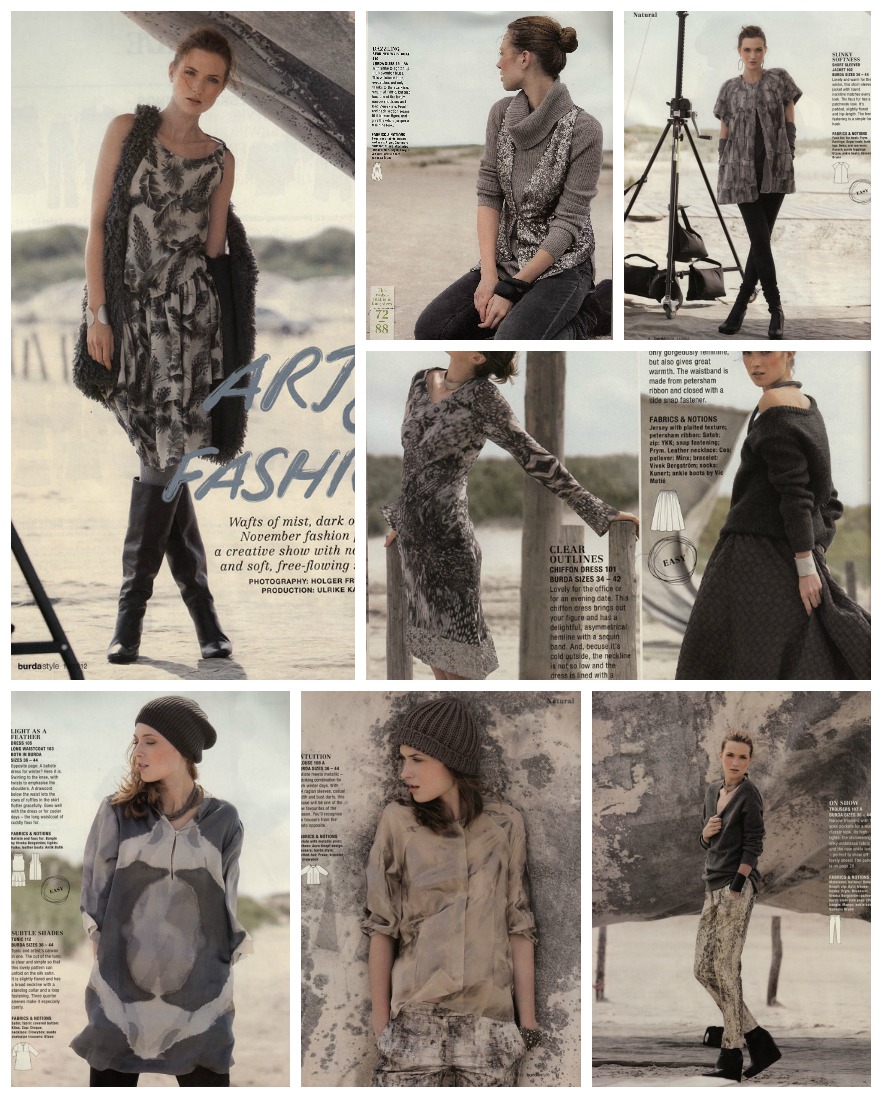
Lots of lovely misty neutrals in the first section this month. I am quite surprised to see a floaty batiste dress (top left, below) considering the chill factor but I like it all the same, especially styled with boots and the faux fur waistcoat. I am also tempted by the blouse, centre bottom row. Batiste with a metallic print…. not sure I will stumble across that fabric choice in the Goldhawk Road, but always worth an ask! It’s got 3/4 raglan sleeves and bust darts so its simple but not completely shapeless.
The trousers (bottom right) are nagging me to attempt my first pair of trousers. These ones have hip yoke pockets and are ankle length to display some fabulous show-off shoes!
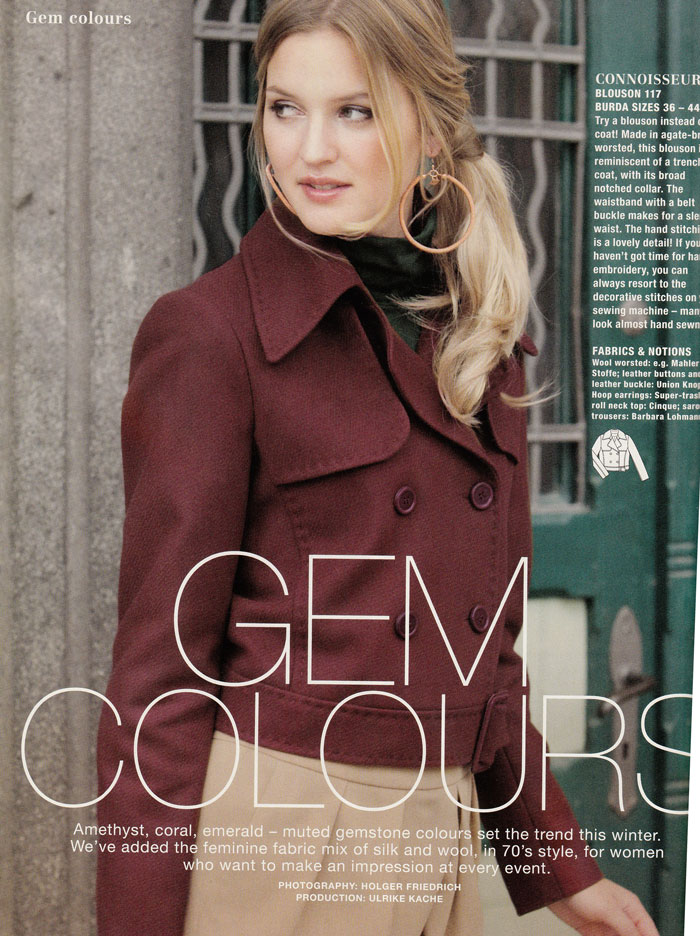
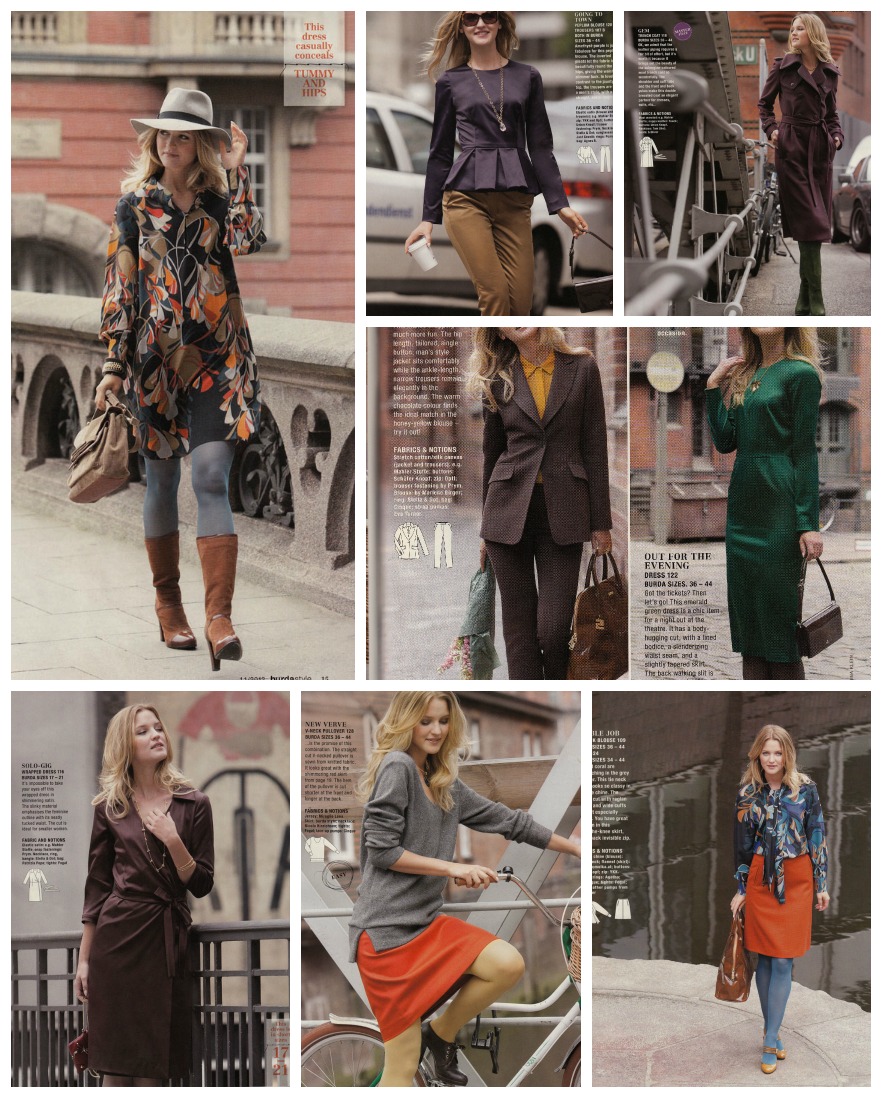
Next up is the Gem Colours section. You may have already have seen some of these patterns on the Burda web site. They were quick to go up this month.
This jacket or ‘blouson’ as its called here, would present such a rewarding project. Having just completed my first proper jacket I’m itching to employ some more tailoring techniques and this one looks like it could present a few more. Its got some beautiful hand stitching going on which gives it such a professional finish.
Undertones of the 70s with oranges, purples and browns are the order of the day for Gem Colours. I’ve not worked with crèpe de Chine before but I think the first dress (below, top left) would be a great place to start. It’s semi-fitted and has a wide neckline, with broad sleeves that taper into slip on cuffs. Perfect for those bloaty days or when you just want to throw something over a pair of leggings or sturdy coloured tights before flying out the door.
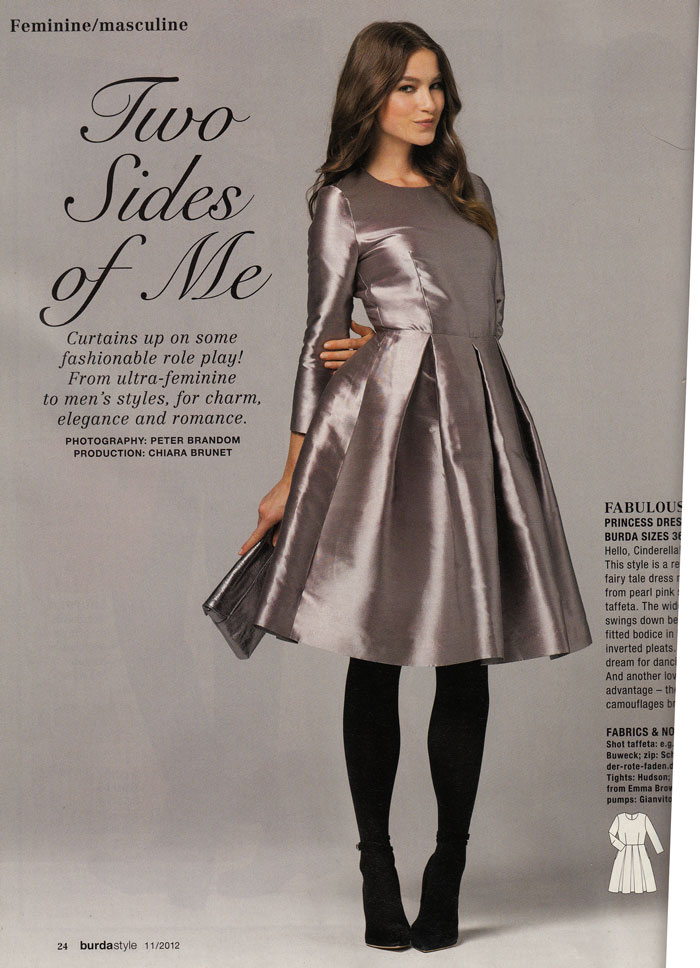
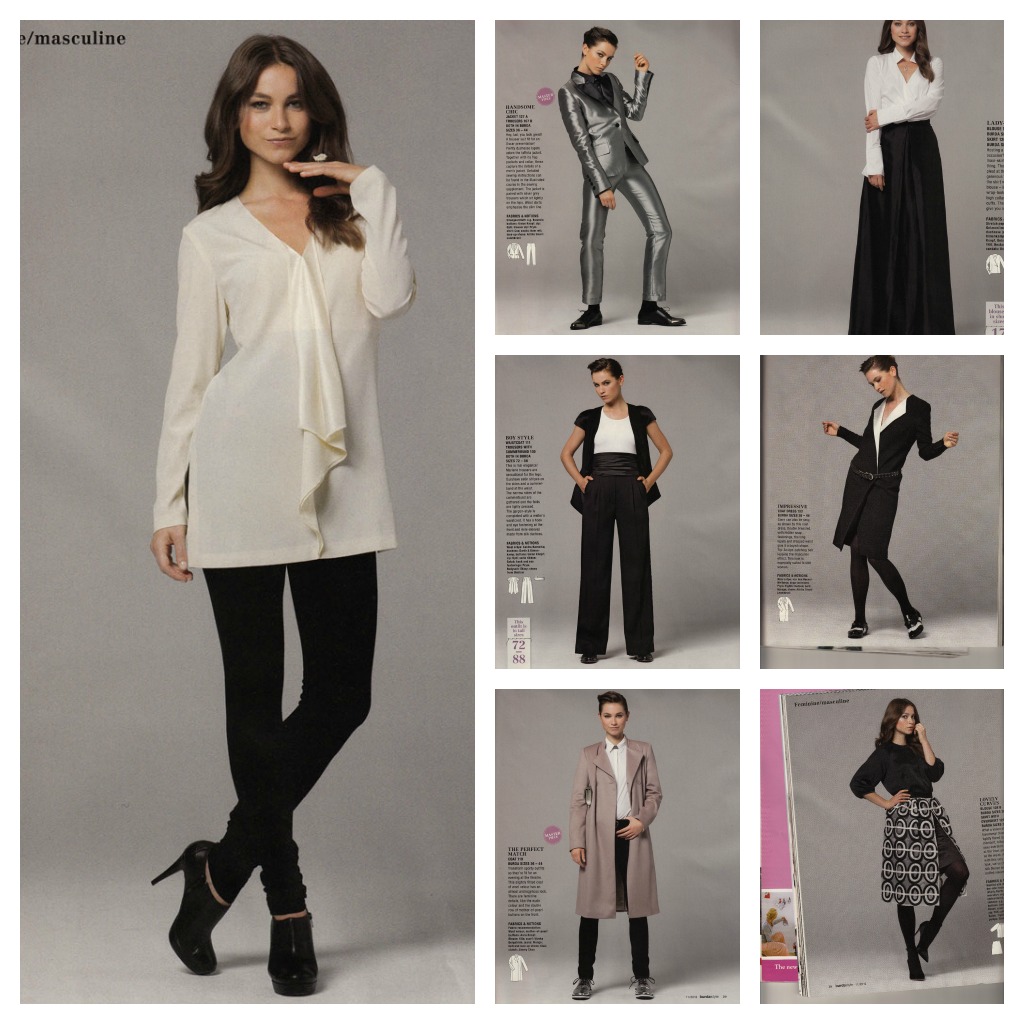
Two Sides of Me is an interesting section this month. I like the dress!
Not too sure about the boyish looks. Bit boyish for me to be honest! But I’m quite drawn to the blouse on the left. Not my usual style but I like the idea that this could be whipped up a couple of hours before a theatre date! It is made of stretch silk satin here. Much like my pin up pants, so I bet it feels gorgeous on!
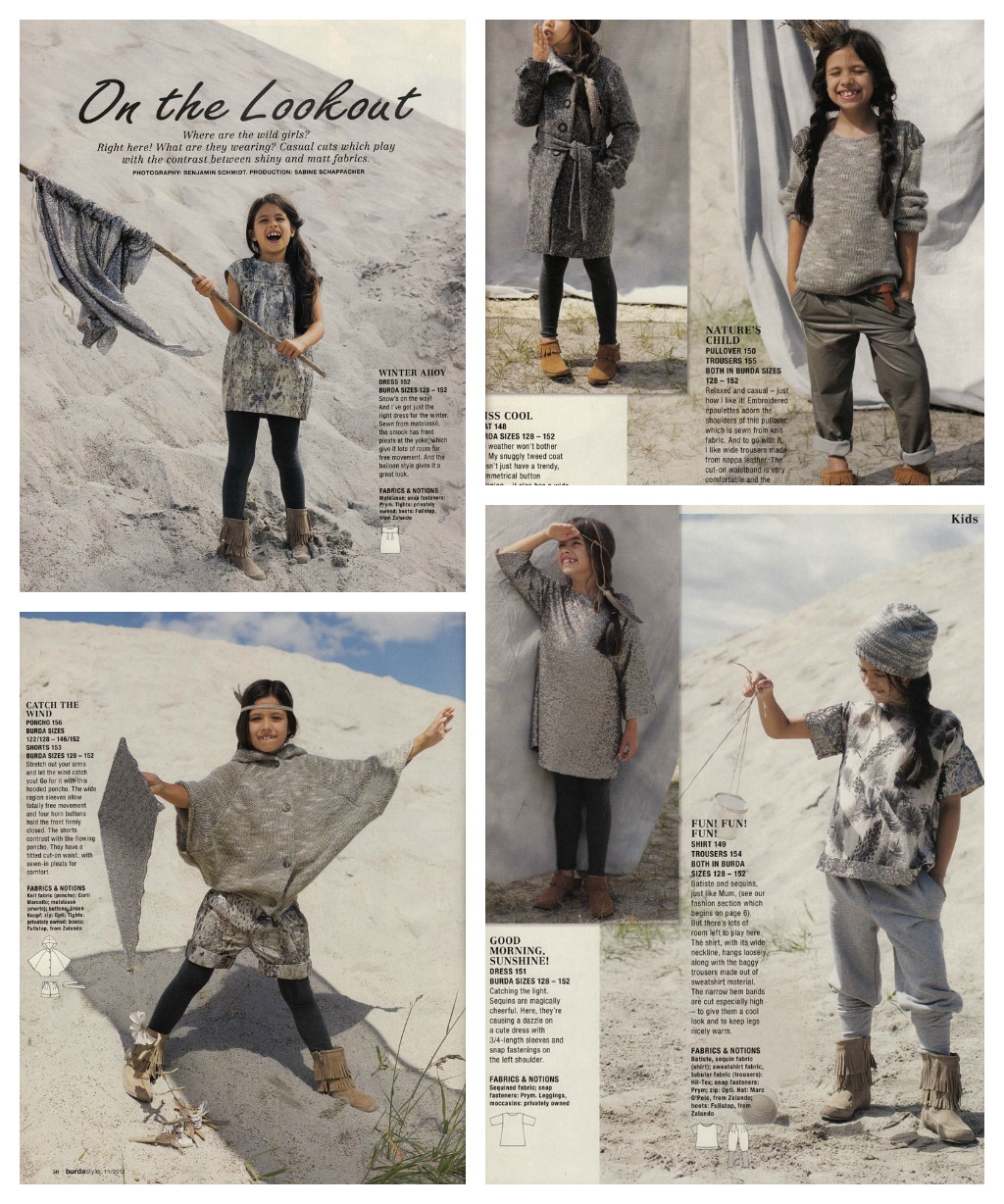
I kind of flicked past the Knits section to get to the Kids. Nothing against knits, honest, and I feel bad now for not including them. But they just seemed like staple loungewear. And I need to avoid making stuff that everyone is going to think is from ‘Primani’!
But… there is some totally cool kid stuff as usual. Keeping the neutral theme and mixing up metallics and matte. Lovely textures and fun, chic designs that will even fit Little Miss Ooobop!… hoorah!!
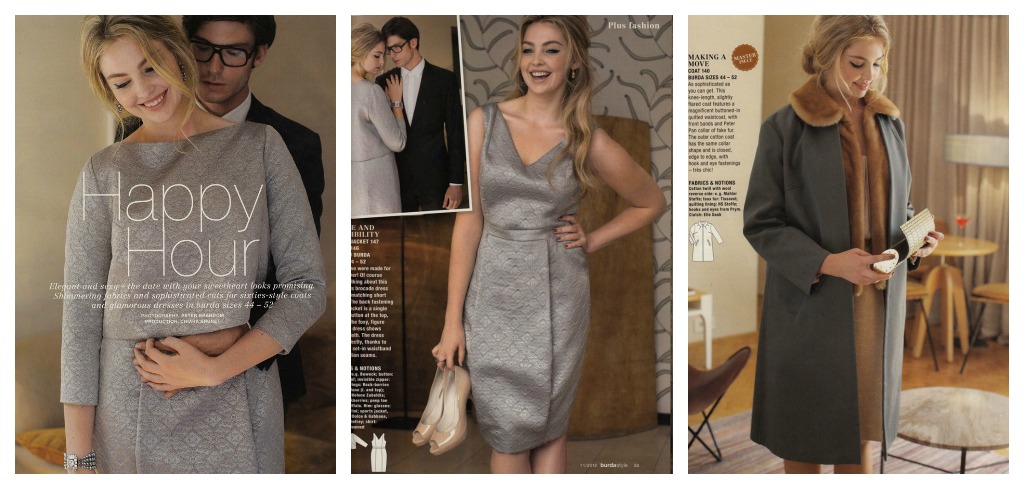
And a Burda mag would never be complete without some hot plus-size gorgeousness. My picks this month are very vintagesque. Creature of habit, moi?! Very elegant and sexy and perfect for a hot wintry date!
Any faves? Any dislikes? Feel free to share your thoughts!
Well, from the very beginning would probably be a good idea! I started this jacket way back in February but was wearing it in my head from the first time I saw it in Burdastyle mag 11/2012! I completely ignored the number of coloured circles which indicate level of difficulty. Half a circle short of the most difficult… how difficult would that be?!
It transpires that it wasn’t particularly difficult, once I’d deciphered the 2 magazine columns of instructions, though my strops might have suggested differently. I really don’t respond well to written instructions as much as pictorial ones!
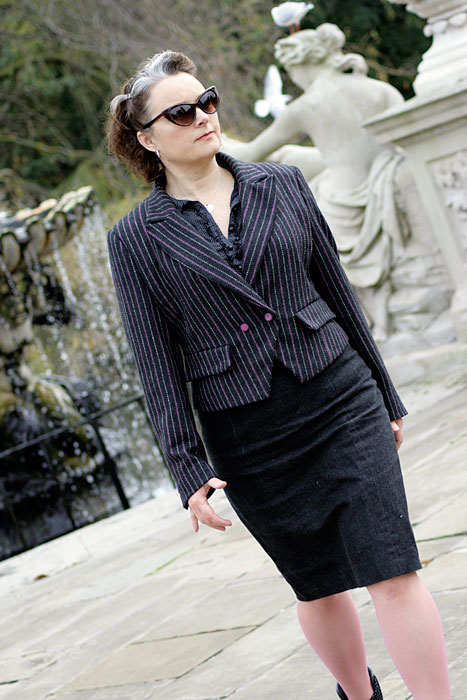
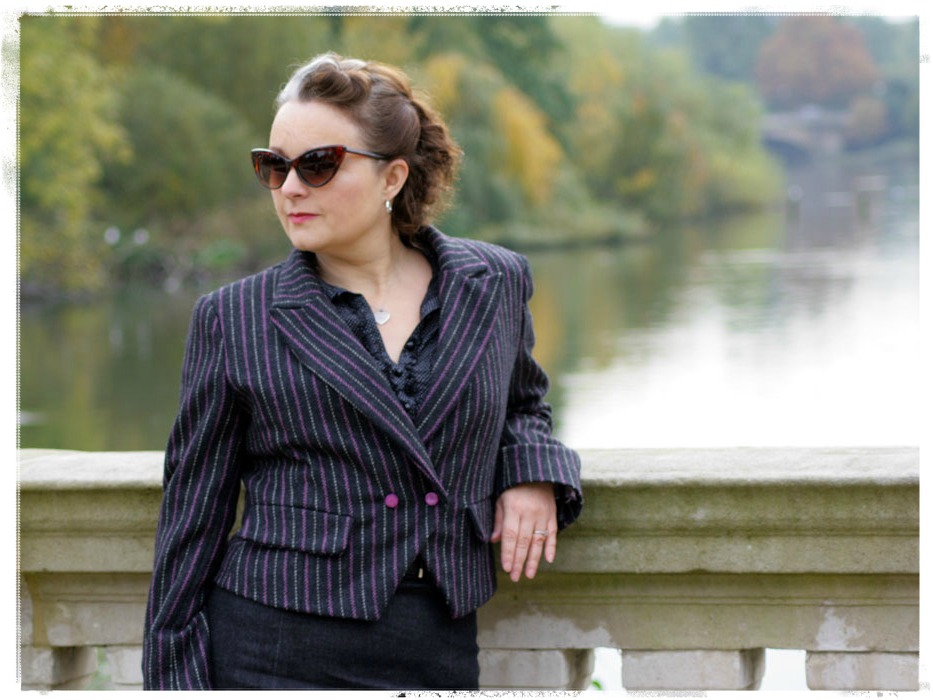
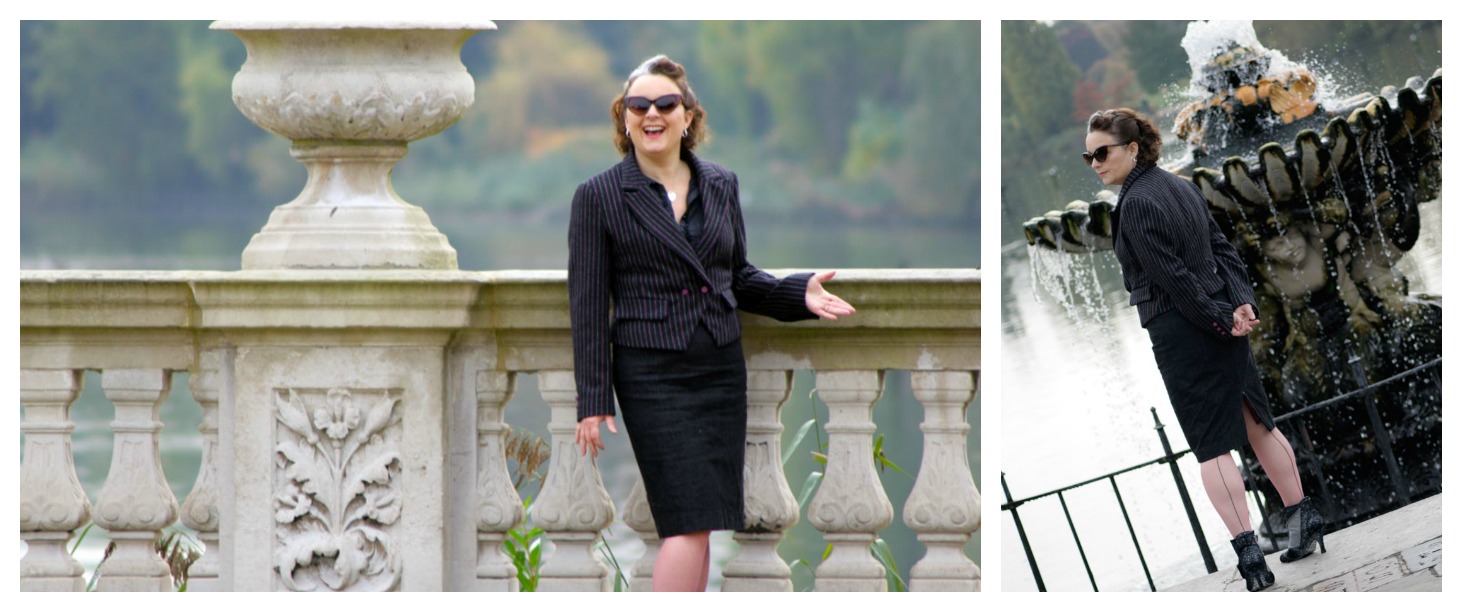
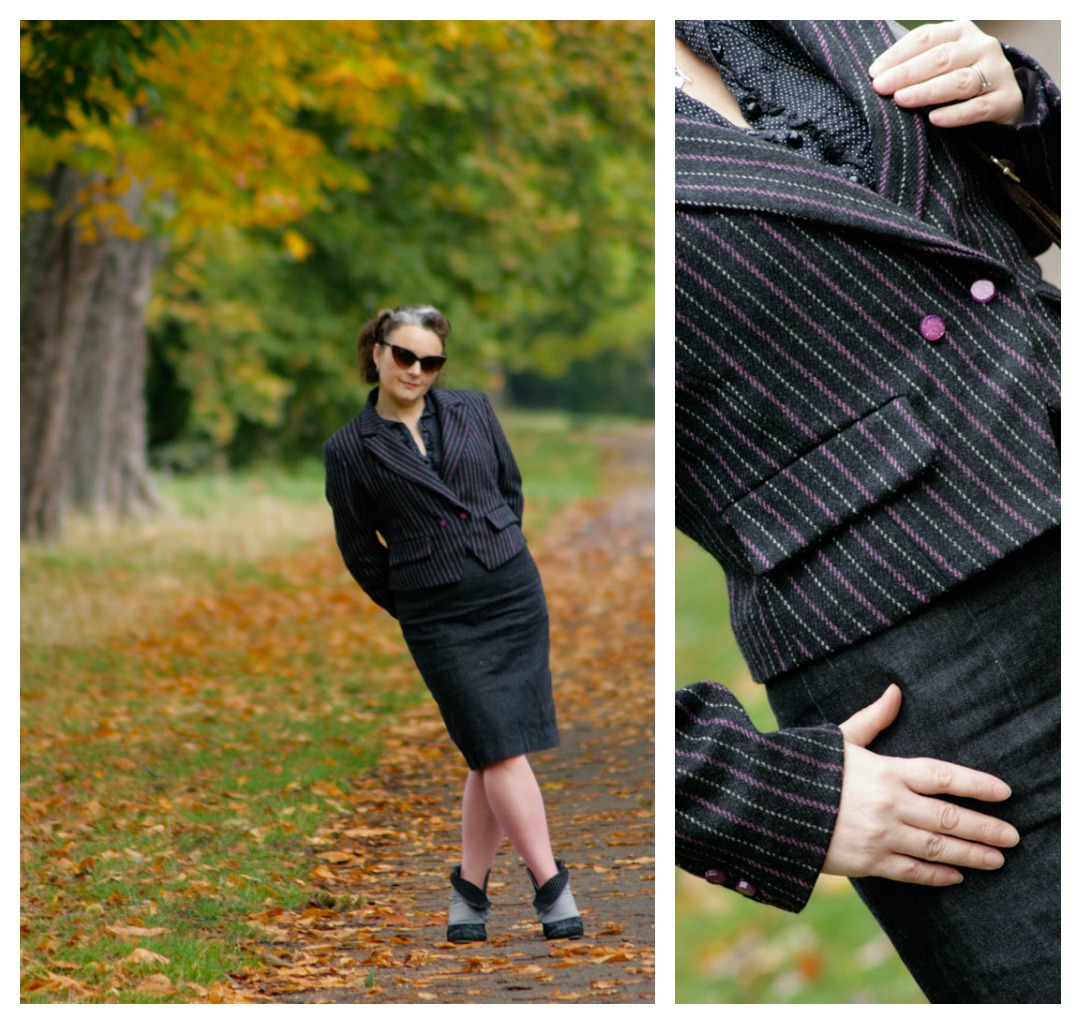
I will do a follow up post with all the niggly construction bits but for now I am so happy to present the finished jacket that was kindly and so brilliantly shot by Mr Ooobop! today. Kensington Gardens provided an amazing autumnal backdrop, despite the lack of sunshine and we had a lovely stroll while Little Miss Ooobop! went to a bowling party at All Star Lanes.
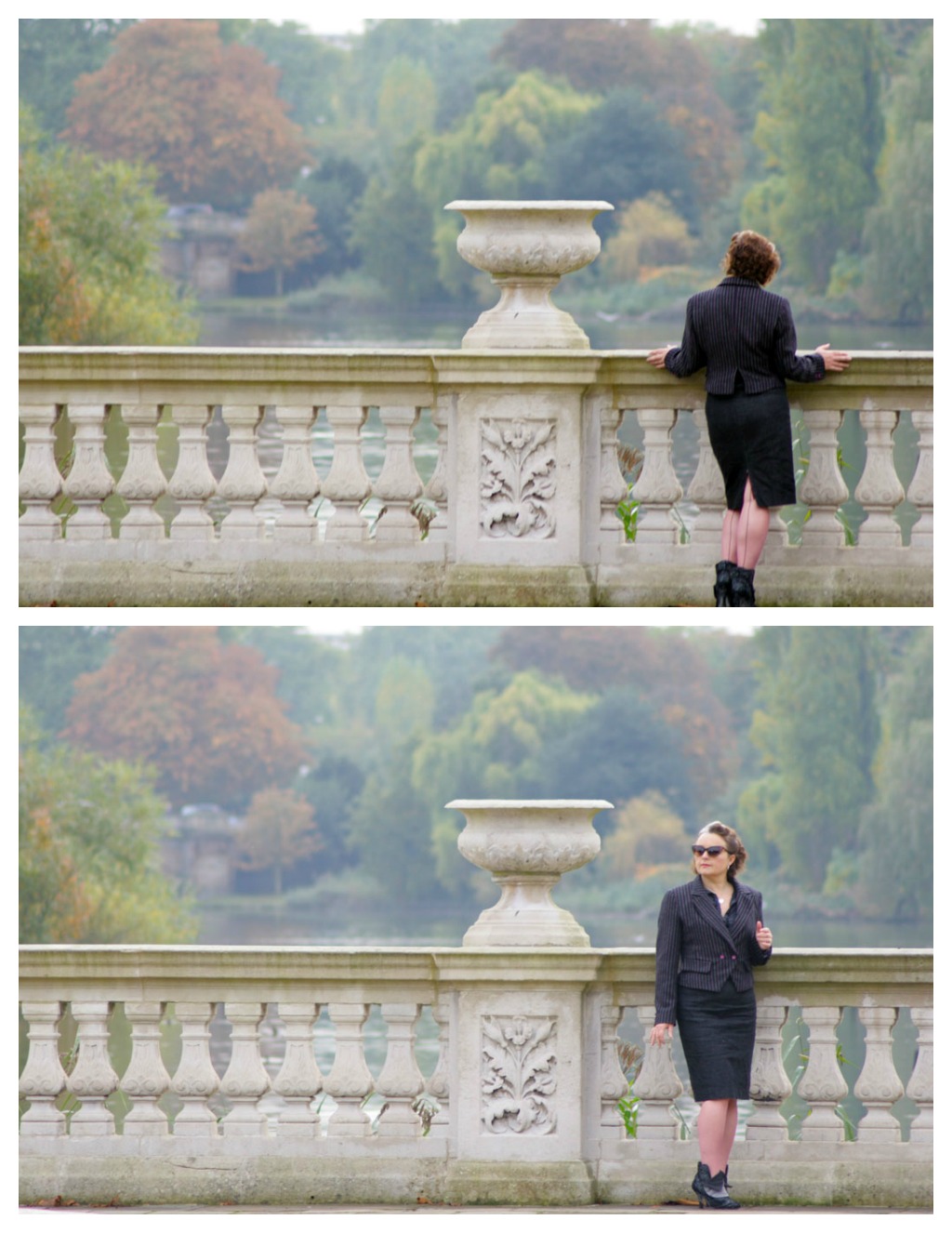
These were taken at the Italian Fountains near Lancaster Gate. It was lovely and misty but still the colours of the trees were beautiful.
Despite the lack of blue sky, my trusty photographer was determined to make use of the gorgeous colours and he got some great detail shots too.
I’m so loving the sparkly raspberry buttons!
Besides being so happy to have finished and be wearing my jacket, today also proved how we take for granted all the beautiful open spaces that London has to offer. So many on our doorstep. Must get out more often!
Wishing you all a wonderful weekend. I’m off to find a tiny project!