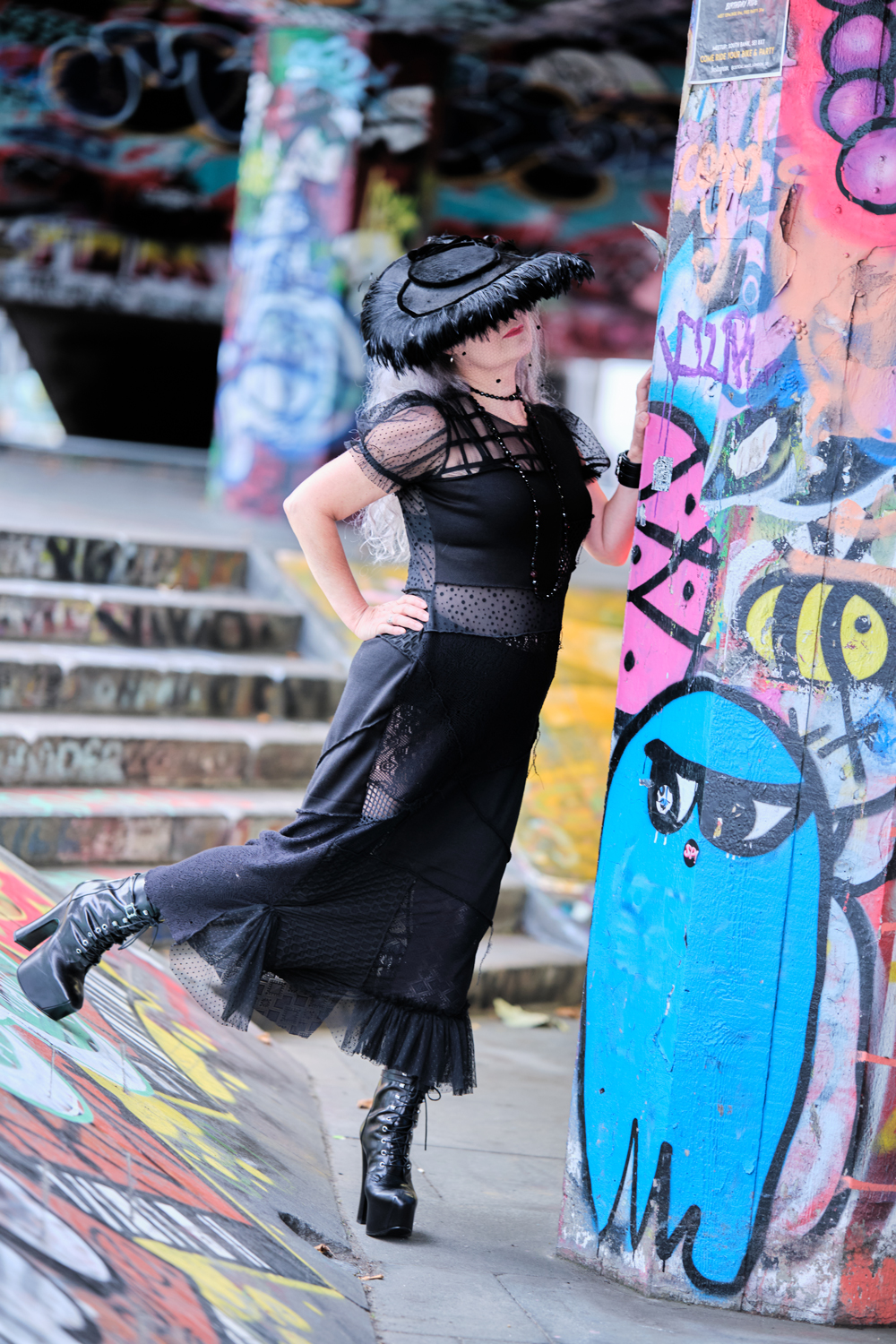

There is something undeniably joyful about creating something new out of what already exists. These days we are surrounded by fast fashion, high-pressure trends, and the relentless expectation that everything we make must be flawless. So when I decided to challenge myself to create a dress using only reclaimed fabrics – no plan, no rules, no perfection – I had no idea how liberating the process would be.
This project began with the simplest idea: make my own fabric. Not by weaving, dyeing, or anything complicated. Just by harvesting pieces from existing garments and sewing them together. Sounds too easy? That’s the beauty of it. There’s no mystery to it, no secret technique. You simply take fabrics you already have – old tops, damaged clothing, thrifted finds – cut them up, and stitch them together using an overlocker. Because an overlocker trims while it sews, you automatically neaten up raw edges as you go. The result is a patchwork panel big enough to cut as your pattern piece. Patch, stitch, trim, repeat… and before you know it, you’re creating fabric that is uniquely yours. Cheap as chips and incredibly satisfying.
For this dress I worked entirely with stretch materials so as not to be too caught up in worrying about fit or facings or notions or finishes. I sourced most of them between a 50p charity shop rail and the ever-brilliant Battersea carboot sale. The garments weren’t perfect; some had stains, tears or stretched necklines but that made them all the more freeing to cut into. I didn’t feel protective or cautious. Unlike expensive fabric, these pieces came with a built-in permission slip to experiment.
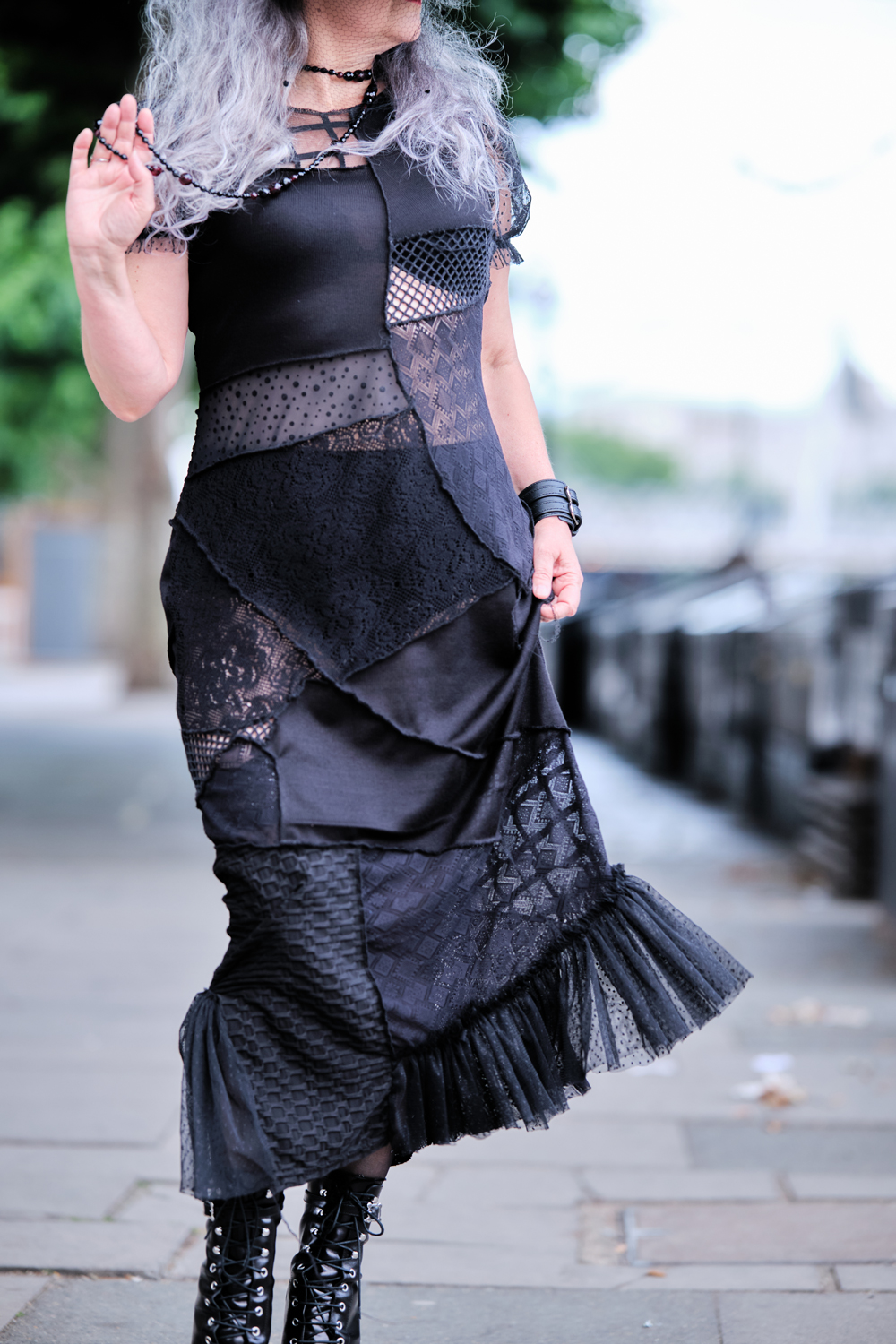
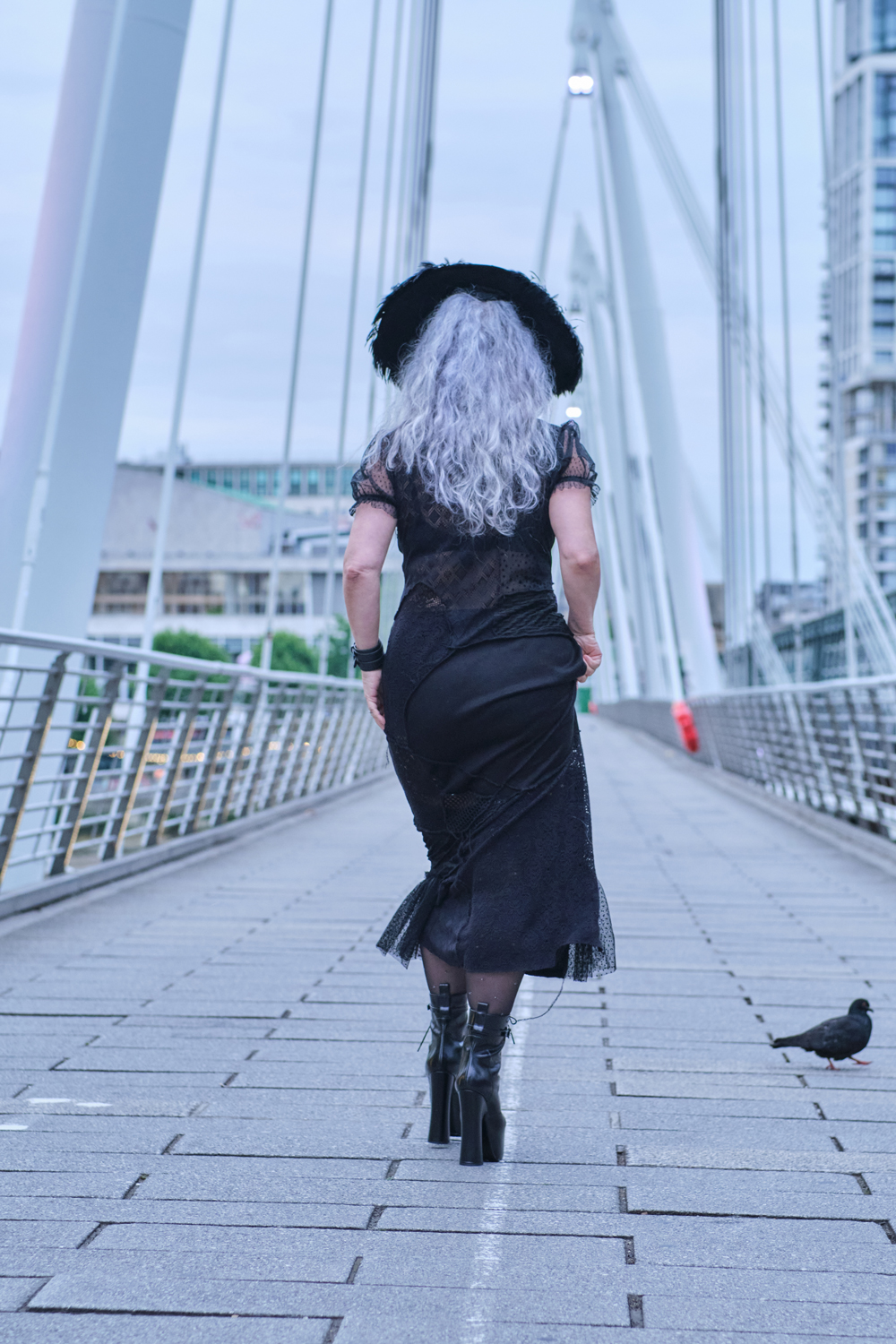
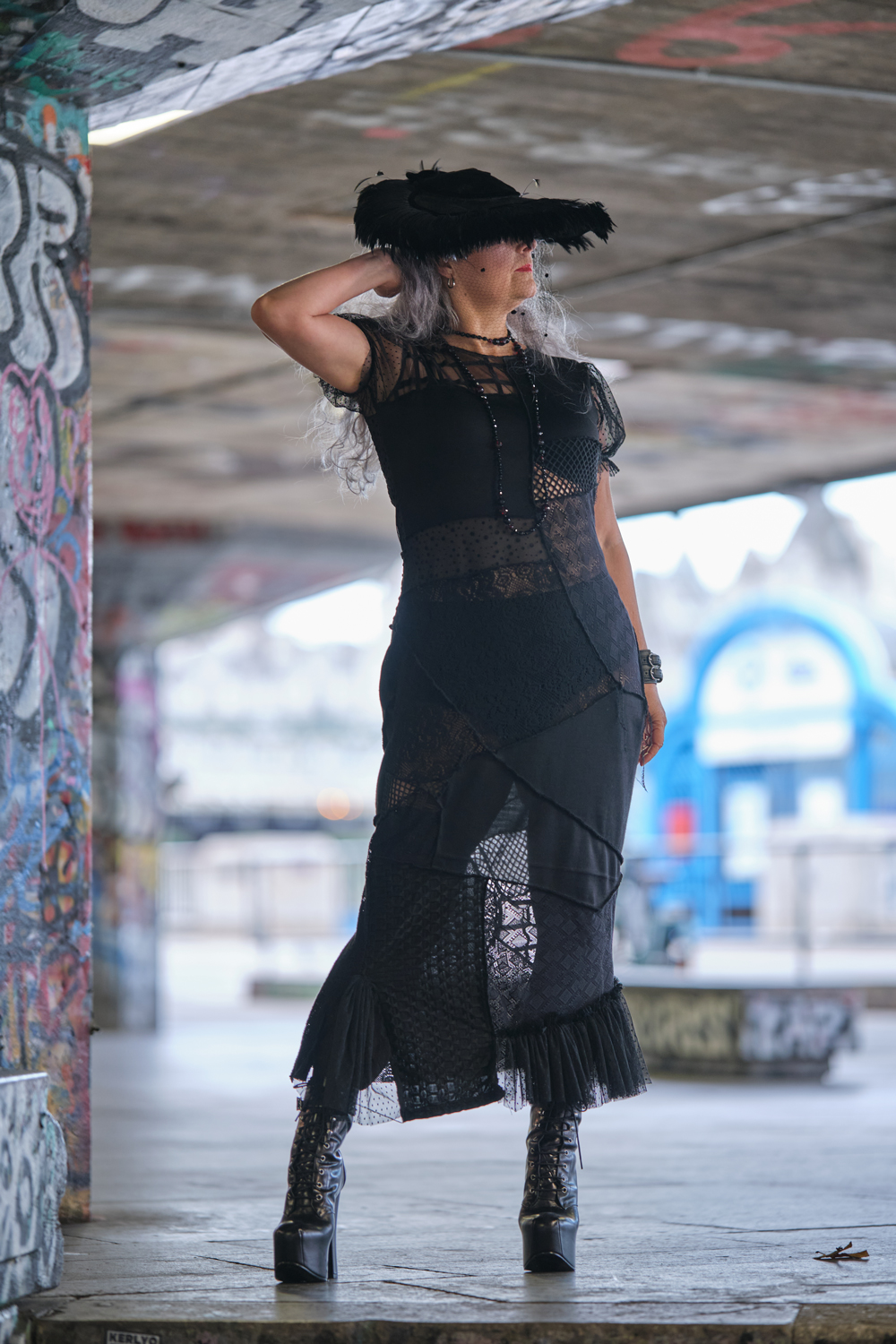
I used leftover tulle for the sleeves and a flouncy bottom finish. The tulle was already in my stash – another leftover patiently waiting for a perfect purpose. I didn’t worry about grainlines, pattern matching, or straight edges. I allowed the shapes to dictate their own placement, sometimes using the original harvested shapes instead of trying to tidy them. I overlocked everything and deliberately kept all the seams visible from the right side of the dress. Loose threads dangle. Some seams twist slightly. The hem is uneven and the flounce is interrupted with rough-cut patches. And here’s the magic: I love every wonky bit of it.
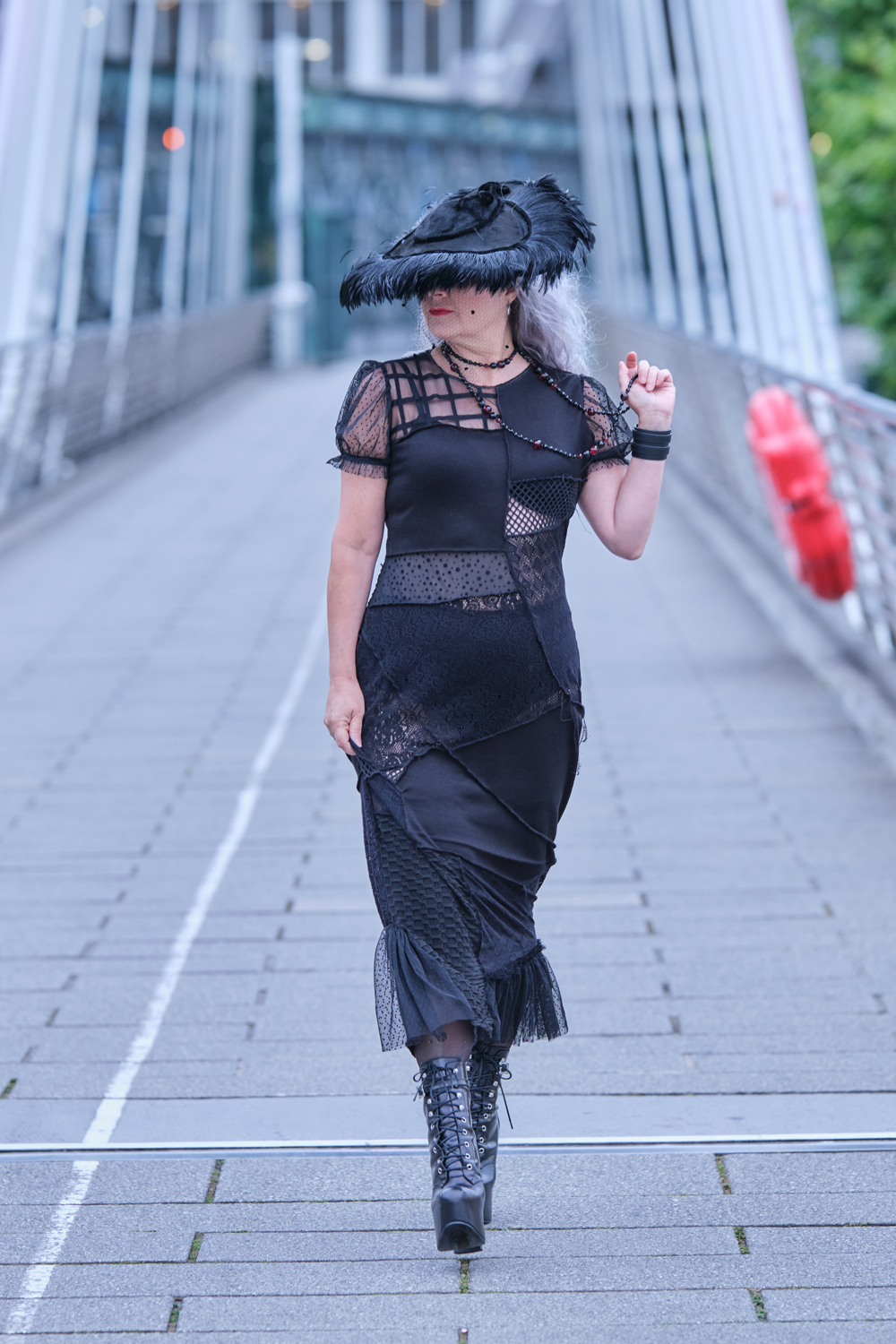
We live with the idea that sewing requires precision. We are told to measure twice, cut once, obey the straight grain, and fear the ripple of a seam that isn’t perfectly flat. But what if we challenge that? What if we occasionally let go of perfection and allow our creativity to take the wheel? While making this dress, I had no plan, no sketch, no brief, and certainly no deadline. The only intention was to play with texture and see what happened. That sense of creative freedom felt cathartic – not just in a sewing sense, but in a very human one. How often are we allowed to do something imperfectly, simply because we want to?
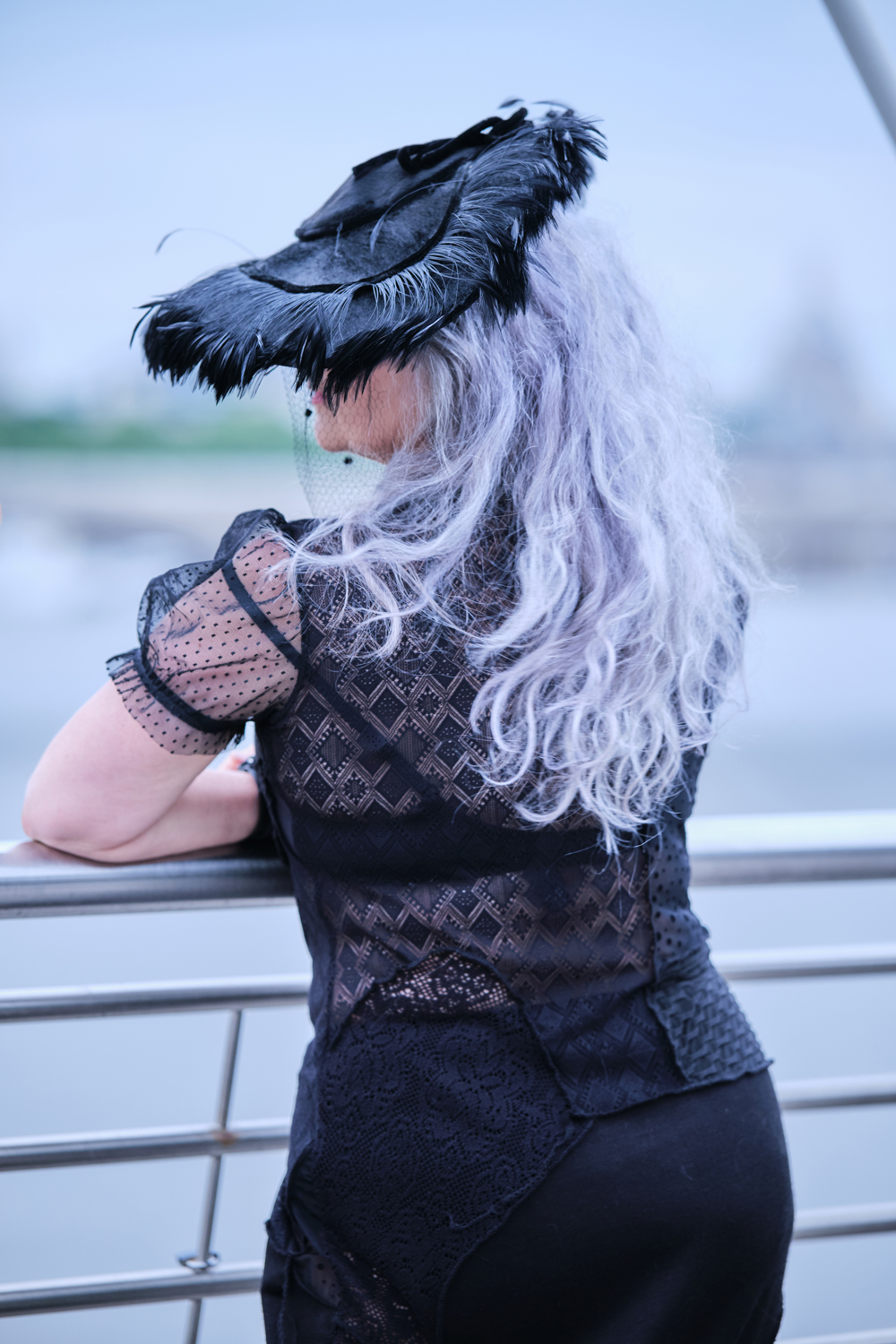
The textures became characters of their own: ribbed knits, soft jerseys, mesh-like fabrics, smooth velvets, and the soft shimmer of tulle. Together they formed something completely unrepeatable. No amount of store-bought yardage could replicate the personality of these mismatched materials, each of which lived a life before entering this dress. That history, however scruffy, becomes a part of the story.
What surprised me most was how glam the finished dress felt when styled. I certainly didn’t start this with “glamour” in mind. But when I paired it with a stunning hat that had been gifted to me by my dear milliner friend Jayne at @hepsibahgallery, suddenly the rough, playful textures transformed into something elevated and theatrical. I’ve always claimed that hats don’t suit me, but perhaps the truth is that hats don’t need to suit a face – they need to suit the outfit. When the two speak the same language, the whole look comes alive. Obvious, really… but apparently I required some patchwork enlightenment to realise it!

The final icing on the cake was having it photographed professionally. The talented @danieljames.photographic captured the textures, the movement, and all the quirky little flaws with such an artistic eye that the dress felt almost couture. It’s amazing what can happen when you follow curiosity instead of perfection.
So here’s my takeaway from this wonderfully scrappy adventure: imperfect doesn’t mean unsuccessful. Sometimes imperfect is exactly what makes something perfect for us. Creativity should be joyful, messy, surprising, and personal. Rules are helpful when they serve you, but when they start suffocating your imagination, it’s time to break them… at least for an afternoon!

If you’ve got a craving to be more free with your sewing, give yourself permission to experiment. Raid the back of your wardrobe, visit a charity shop, or ask friends for old clothes headed for the bin. Don’t overthink it. Start cutting, start stitching, and see where it goes. You might just find that the most beautiful thing you can make is something entirely unexpected.